
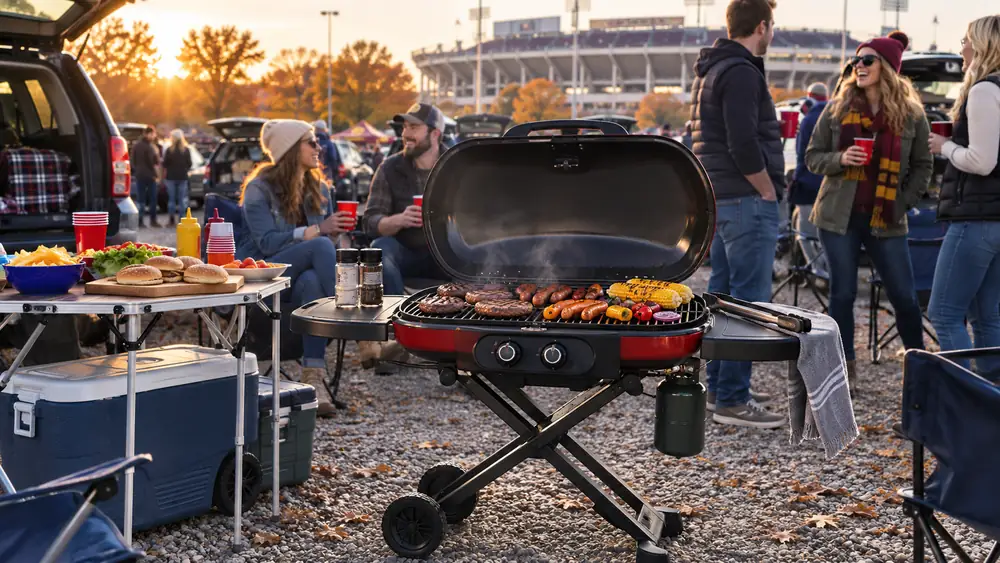
My 22-inch charcoal kettle and my small offset smoker live on my 12-by-14 back deck and they are not going anywhere. But neither one fits in a truck bed, and every fall I load up for tailgates where there is no deck, no outlet, and sometimes no flat ground to speak of. That is the job I bought the Coleman RoadTrip 285 to do, and it has been riding along for six months now, through a full football season and into spring cookouts for six to eight people at a time.
I want to be upfront about what this review is and is not. This is not a kettle replacement and I never treated it like one. It is a stand-up propane grill built to fold flat, roll on two wheels, and get hot fast in a parking lot or a campsite pull-in. Judged on that job, over six months of actual use in actual weather rather than one weekend out of the box, here is what I found, good and bad.
The Quick Verdict
A genuinely well-built portable propane grill that lights fast, holds heat evenly across three burners, and has taken a Pennsylvania winter without a single hinge or wheel failing on me.
Amazon Check Today's Price →Still cooking hot dogs off a hibachi in the parking lot?
The Coleman RoadTrip 285 folds flat, rolls to the tailgate on its own wheels, and gets three burners to cooking heat in under ten minutes. See current availability and price on Amazon.
Amazon Check Today's Price on Amazon →How I've Used It
The RoadTrip 285 has made eleven trips with me since October, nine of them tailgates and two of them weekend camping stops. My routine is the same every time. I lift it out of the truck bed folded flat, unlatch the legs, and it stands up on its own wheeled base without me having to prop anything against a curb or a tire. The whole unstow-to-lit process runs about four minutes once you have done it a handful of times, which matters when you are trying to get food going before kickoff.
Fuel is the one thing I had to plan around before it became second nature. Coleman sells it to run off the small 1-pound propane cylinders, which is convenient for a single quick tailgate but expensive if you are cooking for six to eight people over a full afternoon of burgers, brats, and a second round of chicken. I bought the separate hose adapter early on and now run it off a standard 20-pound tank the same way I would a full-size gas grill at home. That single change is the difference between two hours of cook time and an entire weekend without swapping a canister.
The coldest test came in January, tailgating in temperatures that dropped into the teens by kickoff with a stiff wind cutting across the lot. The InstaStart ignition lit on the first press every single time, which is more than I can say for a couple of butane lighters I have owned that quit the moment the temperature drops. Burner output did fall off slightly in that cold, maybe 10 to 15 percent slower to preheat, but it still got the grates hot enough for a proper sear within about twelve minutes, and nobody in the lot was eating cold food that day.
By March I had settled into a rhythm with it that I did not expect. I actually reach for the Coleman before my kettle now on mornings when I need something running fast and I am not committing to a full low-and-slow cook. That was not the plan when I bought it. It just worked out that way after enough uses.
Build Quality After Six Months of Being Loaded and Unloaded
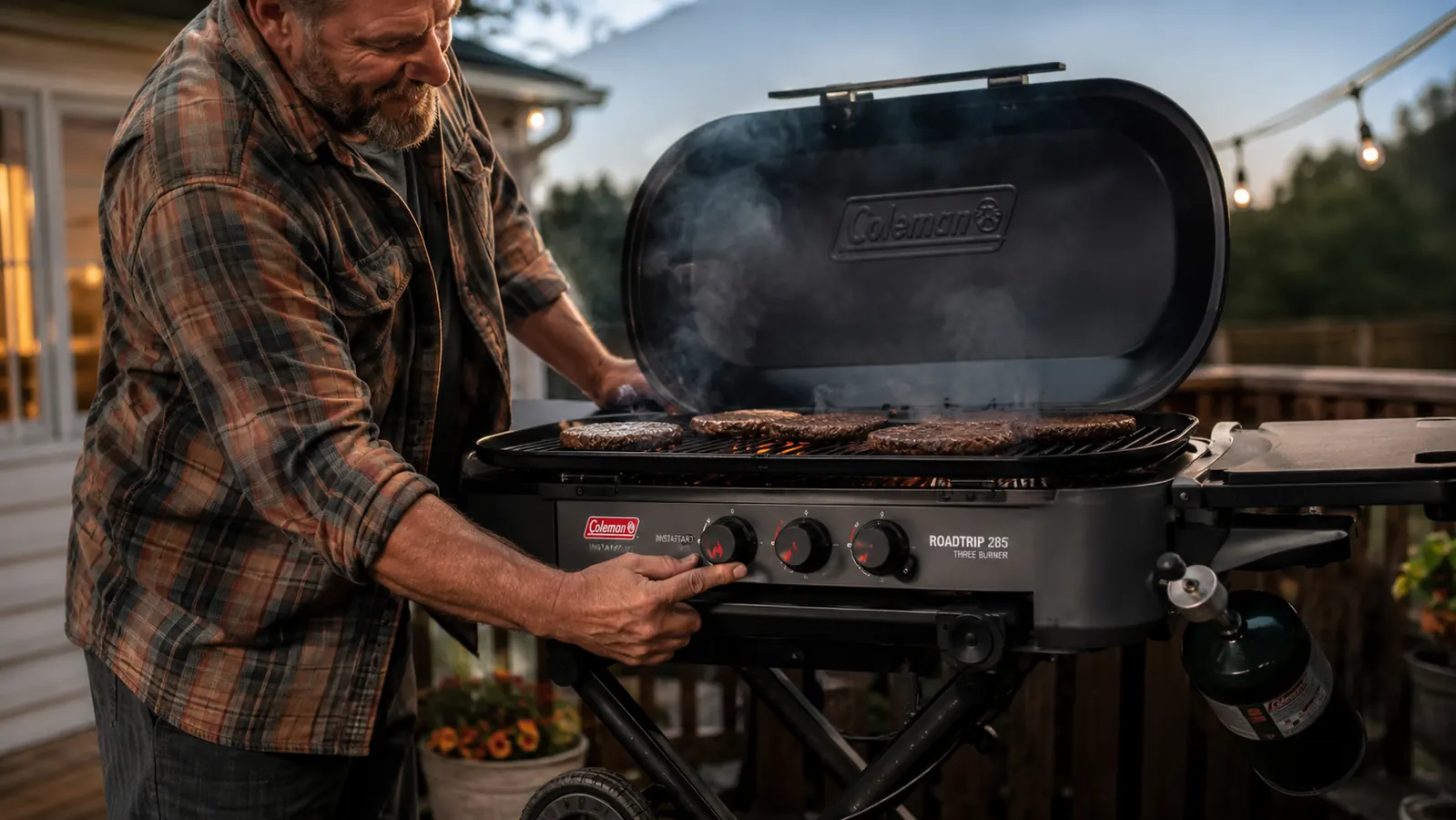
Portable grills usually fail at the hinges and the wheels first, because those are the parts doing physical work every single time you use them, unlike a stationary grill that just sits on a patio. After roughly two dozen fold-and-unfold cycles, the Coleman's hinges still snap into position with the same resistance they had on day one. No wobble, no stripped pivot pins, no play in the leg latches that would make me nervous setting it up on uneven gravel.
The two wheels have picked up scuffs from gravel lots and one memorable curb I misjudged in the dark, but they still roll true, no flat spots and no bent axles. The porcelain-coated grates have held their coating well too. I have not babied them. They go straight from a hot cook into the truck bed wrapped in an old towel, and after six months I see minor surface scratching but no chipping down to bare metal, which is usually where rust starts on cheaper grates I have owned in the past.
The exterior panels show the most cosmetic wear, mostly light scuffing where the folded unit rubs against itself in transit. Nothing structural, nothing that has affected how it seals or fires. I keep an old moving blanket under it in the truck bed now, which stopped the worst of that entirely. I have also started keeping a small wire brush and a folded shop rag clipped inside the cover flap so cleanup at the tailgate itself takes under two minutes before the fold-down.
Heat Performance Across the Three Burners
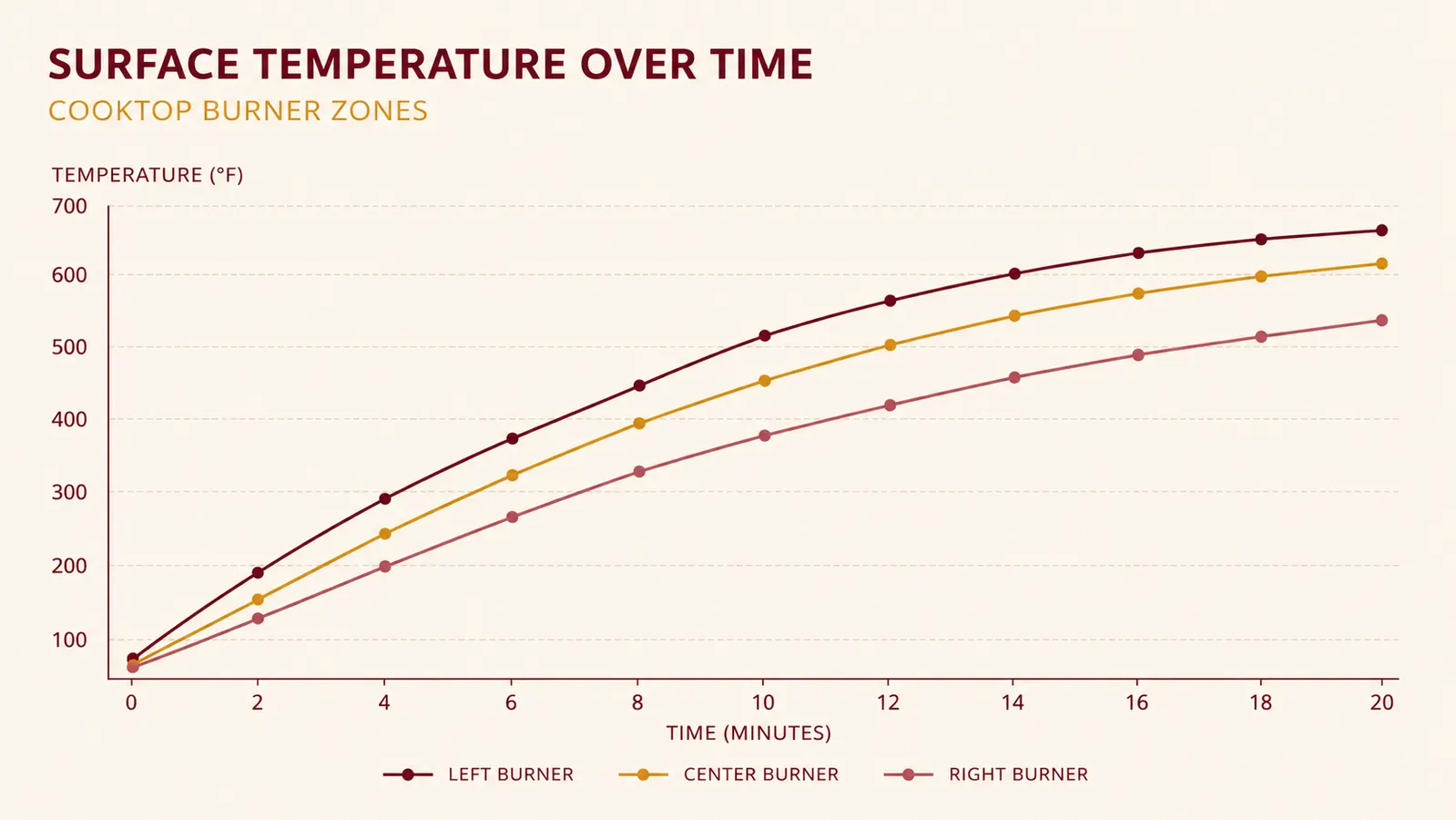
The RoadTrip 285 is rated at 20,000 BTUs spread across three adjustable burners, and in practice that spread is genuinely usable rather than just a spec printed on the box. I tested surface temperature at all three zones during a 20-minute preheat and the outer two burners ran within about 15 degrees of each other, with the center burner running slightly hotter, which is typical for this style of grate layout and matches what I would expect from a grill this size.
What that means for actual cooking is that I can run burgers hot on one side and hold chicken thighs at a lower indirect zone on the other, which is exactly the kind of two-zone setup I rely on with my kettle back home. I did not expect a portable propane grill to give me that kind of control, and it took me a couple of cooks to trust it, but the burner valves are precise enough to hold a low simmer zone without the flame guttering out in a breeze, which is where a lot of cheaper portable grills fall apart.
I ran a side-by-side one Saturday, brats on the Coleman and the same brats on a buddy's single-burner portable, just to see the difference. His stayed pale on one end and split their casings on the other from uneven heat. Mine came off evenly browned end to end. That single test sold two other guys in our group on buying their own.
Who Else I Talked It Over With
Two guys in our tailgate group run the same grill, one going on three seasons and the other his first year with it. The three-season owner's only real complaint matches mine: the stock 1-pound cylinder setup is fine for an emergency backup but not a real fuel plan if you cook for a crowd every week. If you want a side-by-side against a fixed-cart alternative before deciding, I laid out the full breakdown in Coleman RoadTrip 285 vs Weber Q Series.
That conversation also settled something I had wondered about, the lid seal. Neither of their units, nor mine, has developed a gap or warp at the hinge line after multiple seasons, which was my biggest worry going in given how much this grill gets slammed shut on a cold parking lot in a hurry when the wind picks up.
I stopped thinking of it as a backup grill around the third tailgate. It just became the grill I bring.
Cleaning and Storage After a Season
I run the burners on high for five minutes after every cook to burn off grease before folding it down, the same habit I use with any grill. The grease tray underneath is easy to pull and rinse, small enough to fit in a utility sink rather than needing a hose in the yard. Once a month through the season I pull the grates entirely and scrub them with warm water and a stiff brush, which has kept the porcelain coating from staining the way it did on a cheaper grill I owned years ago.
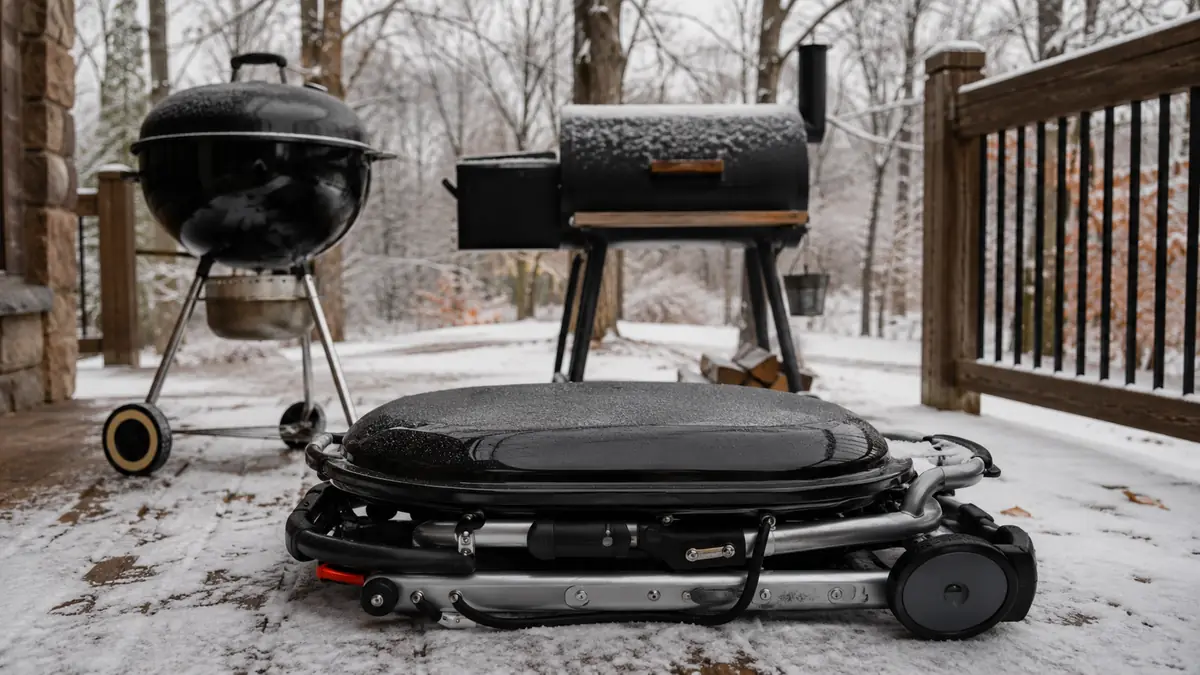
For winter storage between trips, I keep it in the garage rather than leaving it in the truck bed, mostly to protect the regulator hose from repeated freeze and thaw. That is a five-minute habit, not a real chore, and it is the only maintenance step I would call non-negotiable if you want this thing to still be tight after a few seasons.
Tradeoffs I Ran Into
Nothing built to fold flat and roll on two wheels is going to match the total cooking area of a full patio grill, and the Coleman RoadTrip 285 does not pretend otherwise. At full spread across both side tables it handles about a dozen burgers comfortably, which covers my tailgate group but would be tight for a full backyard party of eight or more without running two batches back to back.
The side tables also fold down for storage and I would not lean hard on them loaded with a full sheet pan. They are fine for a plate and a bottle of sauce, not a full prep station. If you want to see the full case for why this style of grill earns a spot in a tailgate kit despite that tradeoff, I go through it in 10 Reasons a Portable Propane Grill Is Perfect for Tailgating.
What I Liked
- Lights on the first press even at teens-range cold
- Three burners give real independent heat zones, not just one wide flame
- Hinges and wheels showing no wear after six months of loading and unloading
- Folds flat enough to lay behind a truck's back seat
- Grease tray and grates are quick to clean between cooks
Where It Falls Short
- Stock 1-pound cylinder setup burns through fuel fast for a crowd
- Side tables are light-duty, not a full prep surface
- Total grate space is tight for parties past eight people
- Slight preheat slowdown in genuinely cold weather
Who This Is For
This is built for exactly the trips I bought it for: tailgates, campsites, and anywhere you need real two-zone propane cooking without a fixed patio setup. If you already run a full-size grill or a kettle at home and need something dedicated to the truck bed for six to eight people at a time, the Coleman RoadTrip 285 has earned that slot for me and for both other guys in my group, and it runs in the high three hundreds at current Amazon pricing, which held up as fair once I priced out how much a season of tailgating actually uses it.
Who Should Skip It
If your cooking is strictly at home on a deck or patio, a fixed grill with a full-size tank and more total grate space will serve you better dollar for dollar, and you would be paying for portability you never actually use. And if you are cooking for a crowd larger than eight on a regular basis, plan on a second cooker or a bigger platform, because this one is sized for portability first and everything else second. I would also skip it if you never leave pavement, since a heavier cart grill will simply outlast a folding frame if it never has to fold.
Football season and camping trips do not wait.
The Coleman RoadTrip 285 has handled a Pennsylvania winter and a full tailgate schedule without a single hinge or wheel failure. Check today's availability and current price on Amazon before your next trip.
Amazon Check Today's Price on Amazon →