Most bad barbecue on a Sunday afternoon does not start with the meat. It starts twenty minutes earlier, at the bag of charcoal, when somebody either soaks the coals in lighter fluid or dumps them in a loose pile and hopes for the best. Eleven seasons of tending a 22-inch charcoal kettle on my back deck have taught me that even heat is not luck. It is a sequence: how you light the coals, how you arrange them once they are lit, and how you manage the vents after the lid goes on. Get that sequence wrong and every cook after it fights you.
I keep two bags of Kingsford Original Charcoal Briquettes in the garage at all times, the 12-pound two-pack, because briquettes give you something loose lump charcoal cannot: a predictable, repeatable burn. Every briquette in the bag is close to the same size and density, so a chimney full of Kingsford lights at nearly the same rate every time and holds temperature in a way I can actually plan a cook around. This piece is the exact method I use to go from a cold grill to a stable 350 degree Fahrenheit grate in under twenty-five minutes, on a 12 by 14 deck, in weather that sometimes drops into the teens by the time I am cleaning up.
Skip the lighter fluid smell and start every cook with a clean, even bed of coals.
The method below works with most briquettes, but I have run it with Kingsford Original for years because the burn is consistent bag after bag. Current price on Amazon for the 12-pound two-pack, and it is worth keeping two bags on hand so you are never caught short mid-season.
Amazon Check Today's Price on Amazon →Step 1: Skip the Lighter Fluid and Use a Chimney Starter
Lighter fluid is the single fastest way to ruin a cook before it starts. It soaks into porous food, chicken skin especially, and leaves a faint petroleum taste that no amount of seasoning covers up. It also burns unevenly, flaring hot for the first ten minutes and then dying off fast, which is the opposite of the steady heat you actually want. I stopped using it years ago and have not missed it once.
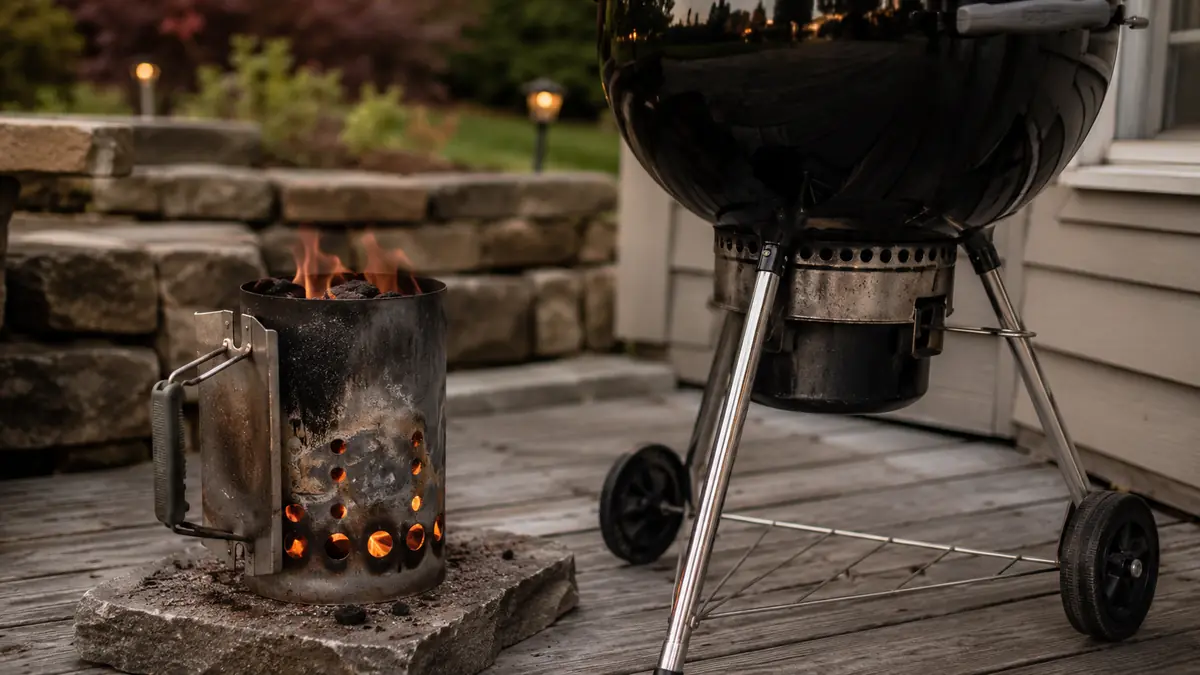
A chimney starter solves the problem completely and costs less than a bottle of fluid. Load it with Kingsford briquettes, stuff two loosely crumpled sheets of newspaper or a pair of paraffin starter cubes underneath, light the paper or cubes with a long match, and walk away. No fluid touches the charcoal or the grate, and the coals light from a clean flame instead of a chemical one. This is the step that determines whether your food tastes like the fire you built or the can you bought.
Step 2: Load and Light the Chimney the Right Way
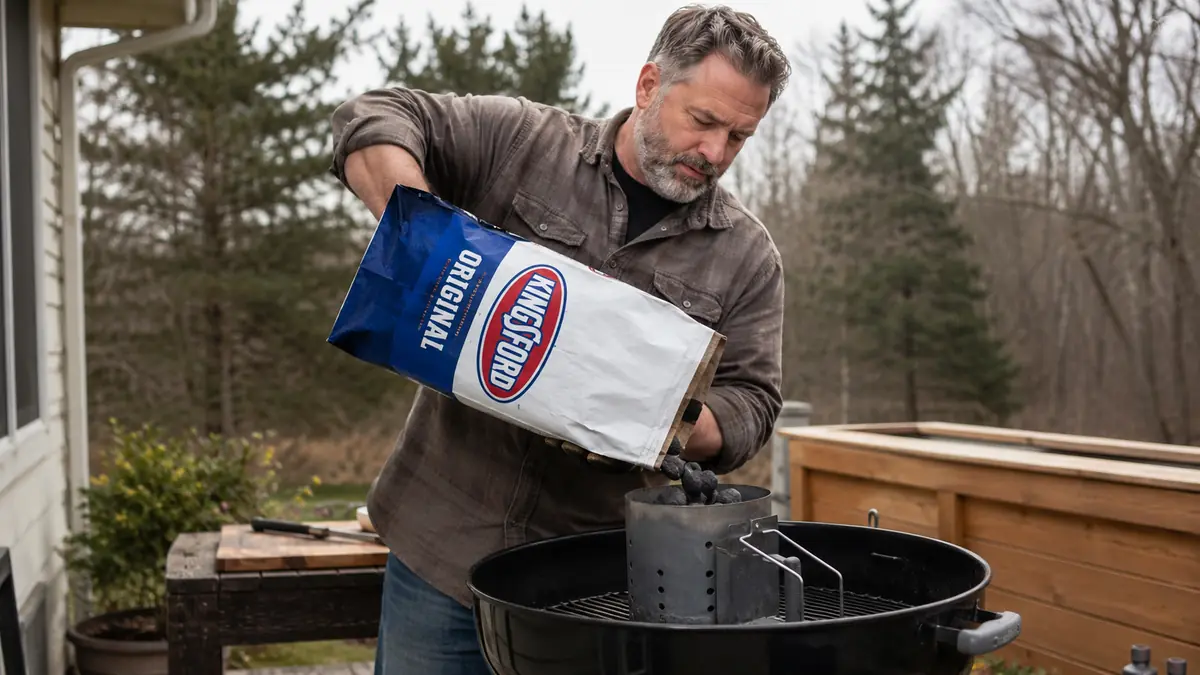
Fill the chimney to the top with Kingsford briquettes, loosely, not packed down. Packing them tight slows the flame's climb and gives you an uneven burn once you dump them. A standard chimney holds close to a full layer of briquettes, which is roughly one hundred pieces, enough for either a hot direct cook or the lit half of a two-zone setup.
Once the newspaper or cubes are lit underneath, the flame climbs through the stack in three to five minutes on a calm day. From there, give it fifteen to twenty minutes for the top layer to reach full ash-over. In cold weather, when the deck thermometer is down into the teens, add another five to eight minutes to that window, since cold air pulls heat off the metal chimney faster and slows the whole process.
You will know the chimney is ready when the top layer of briquettes has turned a light gray coating, and you can see orange glowing through the gaps lower in the stack. Do not dump it early. Coals that are only half-lit will smoke heavily for the first ten minutes on the grate and give you a harsher flavor than a fully ashed load.
Step 3: Decide Two-Zone or Direct Before You Dump the Coals
This decision needs to happen before the coals go on the grate, not after. For a two-zone setup, which I use for thicker cuts like bone-in chicken thighs, pork shoulder, or anything that needs more than fifteen minutes over the fire, dump a full chimney of roughly one hundred Kingsford briquettes onto one half of the charcoal grate and leave the other half completely empty. That empty side becomes your indirect zone, where food finishes cooking through without the surface burning.
For direct cooking, burgers, hot dogs, thin steaks, or anything you are searing fast and flipping often, spread the coals evenly across the entire charcoal grate instead of banking them to one side. A half chimney of about forty-five to fifty briquettes is usually plenty for a quick direct cook on a 22-inch kettle feeding six to eight people. A full chimney spread edge to edge gives you a hotter, faster sear if that is what the food calls for.
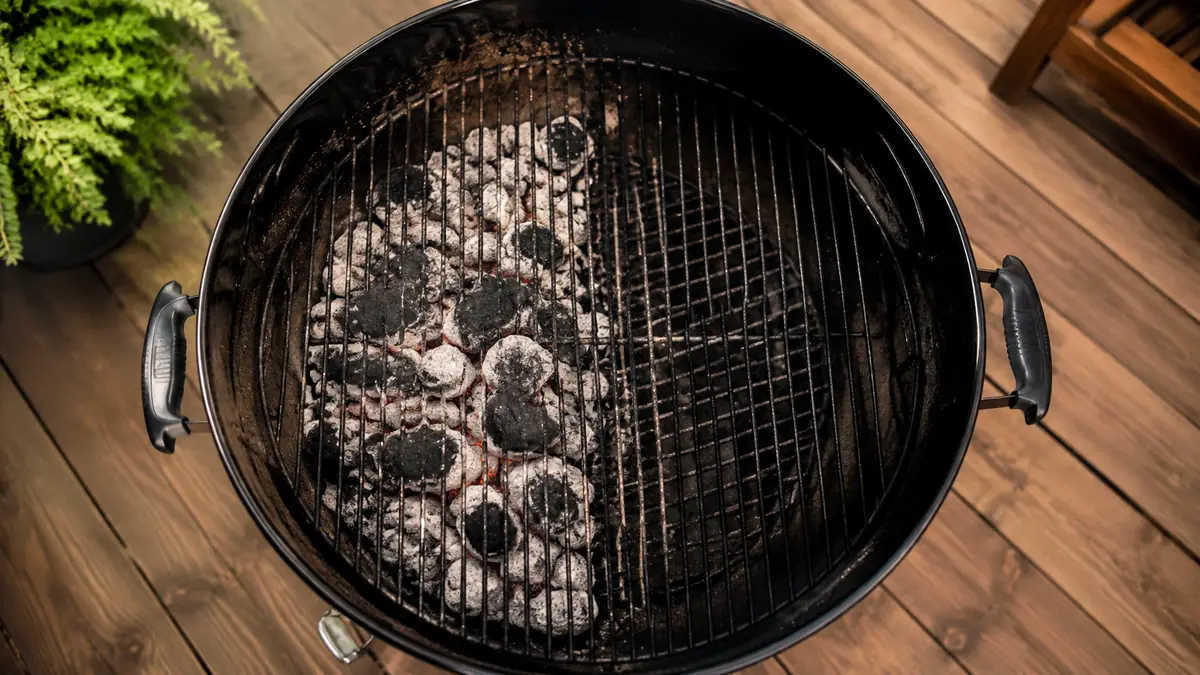
Step 4: Dump, Spread, and Read the Ash Color
Dump the chimney onto the grate according to whichever zone plan you picked, then use long tongs to spread or bank the coals into their final shape. The ash coating should look light gray to whitish gray across most of the pile, which means the fire has stabilized. If you see a lot of black, unashed briquettes mixed in, or bright orange flare-ups rather than a steady glow, give it another three to five minutes with the lid off before you put the cooking grate and food on.
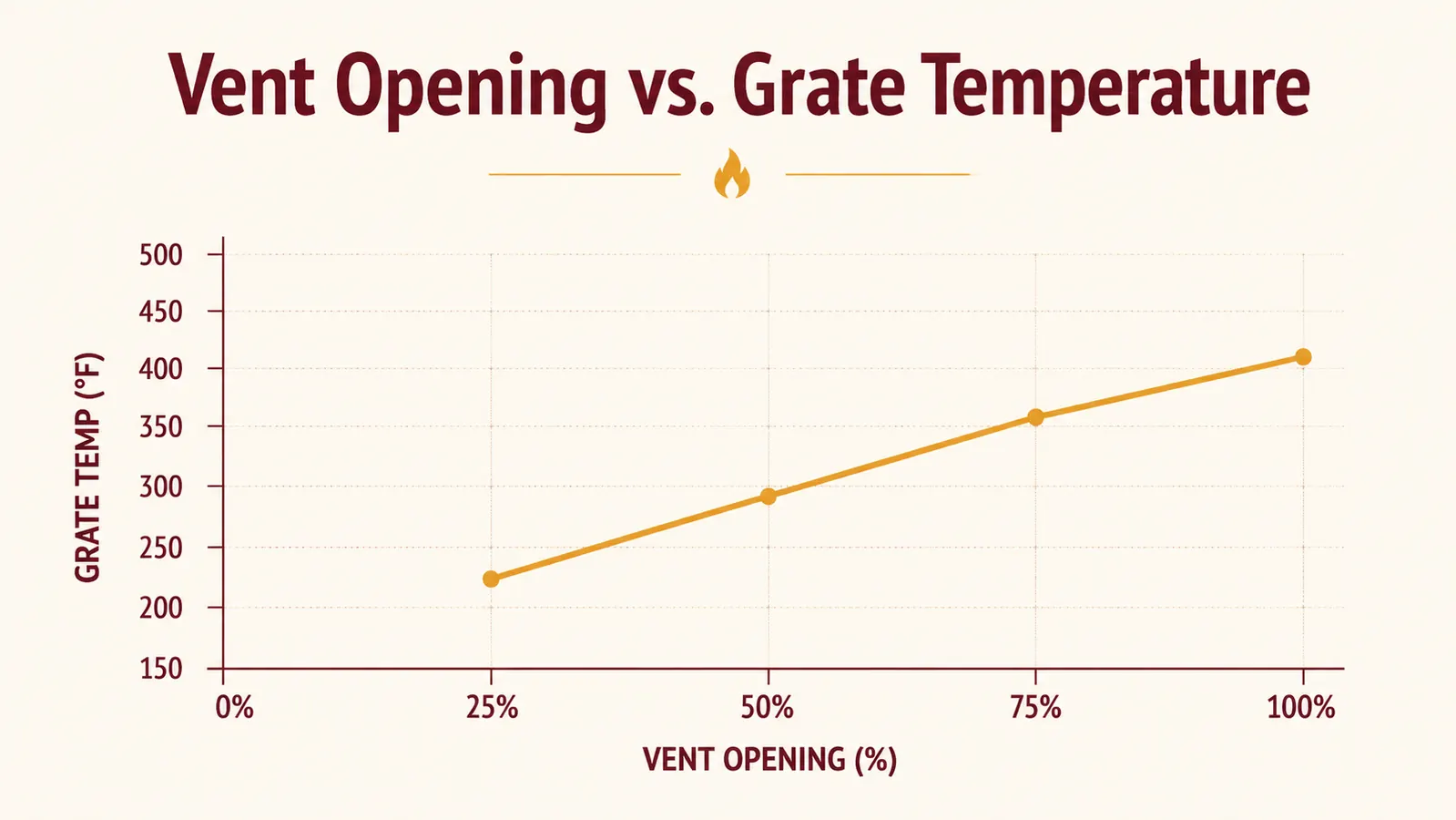
Vent control is how you hold a target grate temperature once the fire is set. As a rough guide on my kettle, bottom and top vents open about a quarter of the way holds somewhere around 250 degrees Fahrenheit, half open lands closer to 325 to 350 degrees, and mostly open with both vents pushes past 400 degrees. Adjust in small moves, a quarter turn at a time, and wait five to ten minutes before checking the grate thermometer again. Charcoal fires respond slowly, and chasing the temperature with big vent swings just makes it swing past where you wanted it.
Step 5: Hold the Burn with the Minion Method for Long Cooks
For anything running past three or four hours, a full chimney burns out faster than you want it to. The minion method fixes that. Pile unlit Kingsford briquettes into your indirect zone the way you normally would, then pour a smaller amount of fully lit coals, about a quarter to a third of a chimney, on top of or against one edge of that unlit pile. The fire spreads slowly outward through the unlit briquettes instead of consuming everything at once, which is what stretches a single load into six or more hours on my small offset smoker and works just as well inside a kettle.
When you do need to top up mid-cook, use long tongs and add a handful of unlit Kingsford briquettes against the edge of the existing lit coals, not directly on top or in the center. Adding them at the edge lets them catch gradually as the fire spreads to them, instead of smothering the coals you already have going. Never add briquettes soaked in lighter fluid mid-cook, and keep the lid on as much as possible while you top off, since every extra minute with the lid open bleeds heat you will have to earn back.
Troubleshooting: When the Coals Won't Cooperate
Coals won't light at all. This is almost always a paper or airflow problem, not a charcoal problem. Use dry newspaper, not glossy inserts, which do not catch as well, and make sure the chimney is sitting somewhere air can pull up through the bottom vents, not directly on solid concrete with no gap. If the briquettes themselves have been sitting open in a damp garage, they can pull in enough moisture to resist lighting. Store your Kingsford bag sealed, and if a bag has clearly gotten wet, expect a slower start and give it extra time.
The fire dies out too early. This usually means the coals were dumped and spread too thin, or the vents were closed down too far too soon after lighting. A thin, scattered layer of briquettes loses heat fast because there is not enough mass holding a coal bed together. Bank the coals a little tighter next time, and leave both vents mostly open for the first ten minutes after you dump the chimney before you start dialing them back.
Heat is uneven across the grate. This is a setup problem, not a lighting problem. If you spread coals for a direct cook but left gaps or thin patches, food over the gaps will lag behind. Rake the coals into a single even layer with no bare spots before the food goes on, and rotate anything that seems to be cooking slower than its neighbors rather than assuming your grill is broken.
Too hot to control. If the grate is running well past your target even with both vents mostly closed, you likely dumped too much lit charcoal for the cook you are doing, or the coals were still climbing in temperature when you closed the lid. Close the vents most of the way, not all the way, since fully closing them can smother the fire and cause it to relight unevenly later, and give it ten minutes to settle before judging where it lands.
Wind keeps messing with the fire. Wind pulls extra oxygen through open vents and can spike temperatures fast, or it can blow directly into the intake and overdrive one side of a two-zone setup. Turn the kettle so the vents face away from a strong crosswind if you can, and check the grate thermometer more often than usual, since a windy cook can swing thirty or forty degrees in a few minutes without you touching anything.
What Else Helps
Beyond the chimney and a bag of Kingsford, a few cheap tools make this whole process easier. If you are still deciding between briquettes and loose lump charcoal for your setup, I laid out the case for briquettes in more detail elsewhere on the site. A pair of welding-style gloves lets you handle the chimney and shift hot coals with your hands instead of fighting everything with tongs alone. A cheap ash tool or old grill brush handle makes it easy to rake coals into a clean bank without disturbing the fire. And a separate grate thermometer, not just a lid thermometer, matters more than people expect, since lid temperature and food-level grate temperature can differ by twenty or thirty degrees depending on your setup.
The fire does not care how good your grill looks. It cares whether the coals were lit clean, spread with intention, and given the right amount of air. Everything else is just gear.
A steady fire starts with charcoal you can trust to burn the same way twice.
I have run through more brands of briquette than I can count over eleven seasons, and Kingsford Original is the one I keep coming back to for a burn I can actually plan a cook around. Current price on Amazon for the 12-pound two-pack.
Amazon See Kingsford Charcoal Briquettes on Amazon →