
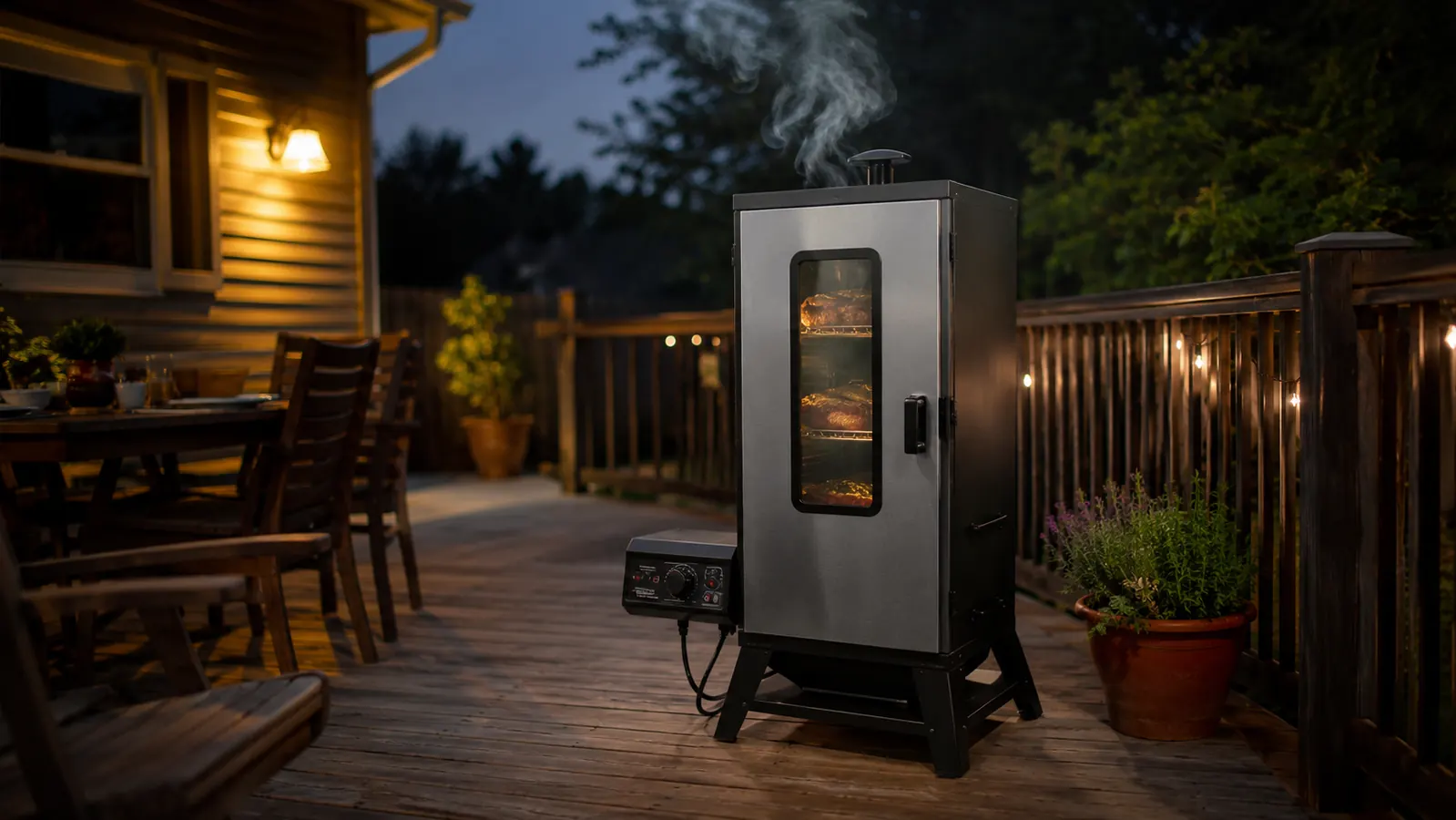
I have run a 22-inch charcoal kettle and a small offset smoker on my 12 by 14 back deck for eleven seasons, and I still light one of them most weekends. But two winters ago I added a Masterbuilt 30-inch electric smoker to the lineup, mostly to see if it could earn a permanent spot next to gear I already trusted, and it has. This is not an argument that electric beats charcoal in every way. It doesn't. It is ten specific, honest situations where the electric smoker is simply the better tool for the job, especially if you are still new to smoking and still building the instincts that come with a live fire.
None of this comes from a lab test. It comes from plugging the Masterbuilt in on real Tuesday nights, real overnight cooks, and real Pennsylvania cold snaps, then paying attention to how much babysitting each cooker actually demanded. If you're weighing your first smoker and keep circling back to whether charcoal is somehow the more serious choice, read the full long-term review after this, then come back to these ten reasons.
Beginners don't need a harder cooker, they need a consistent one.
The Masterbuilt 30-inch Electric Smoker holds temperature through a full cook without babysitting a fire, which is exactly what makes the first ten to fifteen smokes less intimidating. Current price on Amazon.
Amazon Check Today's Price on Amazon →It's Ready When Your Evening Isn't
After a full day, I don't want to build and nurse a fire before I can even think about dinner. I plug the electric smoker in, set the analog dial to 225 degrees, and it's holding steady heat in under thirty minutes with none of the vent adjustments a kettle needs to settle in. There's no chimney starter, no waiting for coals to ash over, no guessing when the fire is actually ready to cook on. That gap matters most on a Tuesday, not a Sunday.
Overnight Brisket Without a 2 A.M. Wake-Up
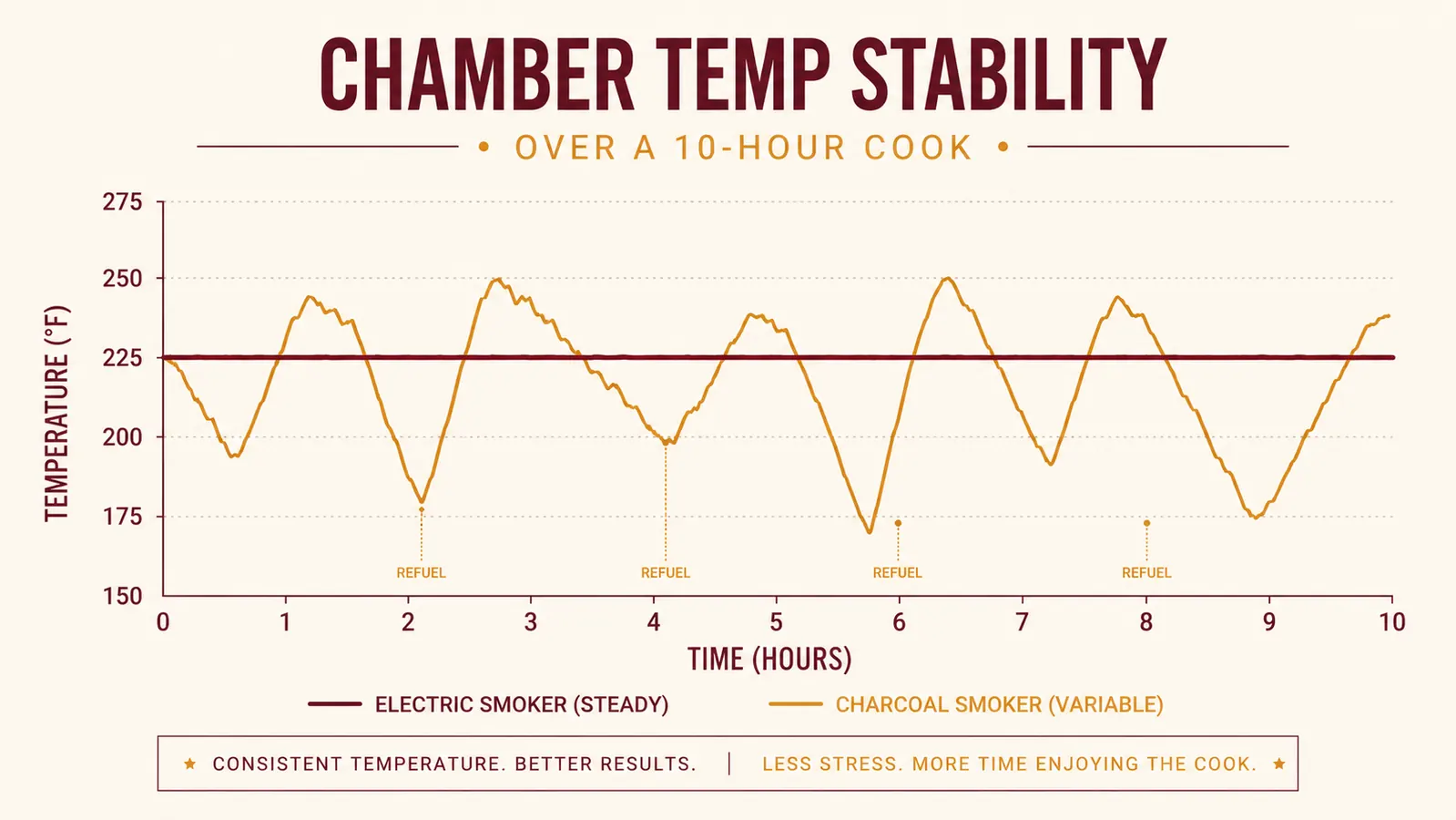
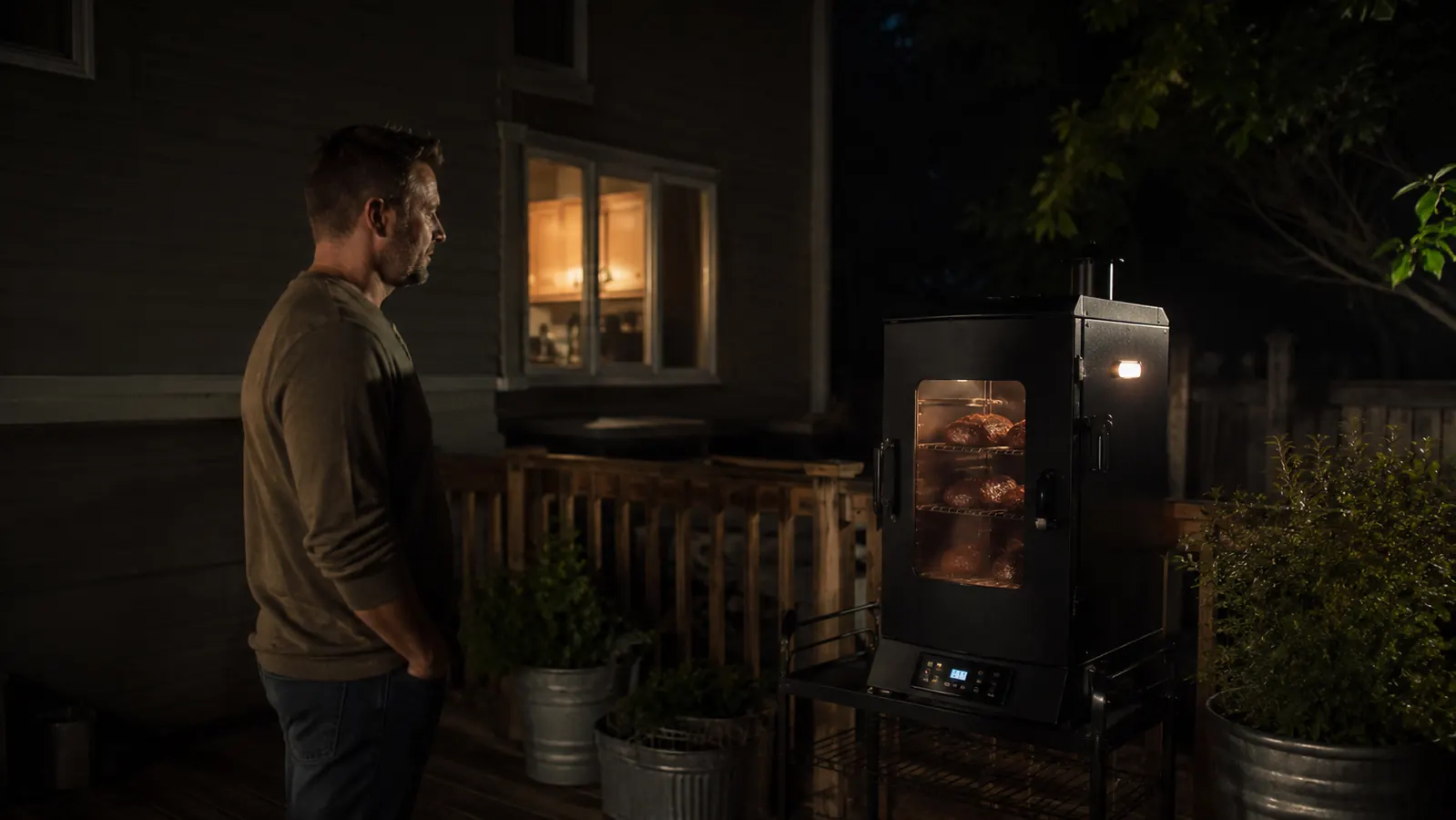
My offset smoker needs a log added every 45 minutes or so, which means an overnight brisket means setting an alarm. The electric smoker holds its set temperature on its own for eight, ten, even twelve hours. I wrote up a full overnight cook in this brisket walkthrough, and the short version is I slept through the night and woke up to a finished bark. I still check on it once around midnight out of old habit, but the smoker has never once actually needed me to.
It Doesn't Flinch When the Deck Drops Into the Teens
Once winter pushes the thermometer on my deck into the teens, my kettle's vents get harder to trust and a wind gust can steal heat fast. The electric smoker's heating element doesn't care about wind the same way a live fire does. A kettle's fire wants to be shielded from that kind of gust, and mine sits close enough to the house that shielding it well isn't always practical. I've run the electric smoker in genuinely miserable cold and watched the dial hold its number the whole time.
The Dial Forgives a Beginner's Mistakes
Fire management on a kettle or an offset is a skill you build over seasons, not a weekend. An analog dial removes most of that learning curve. You still need to manage wood chips and a drip pan, but you aren't also chasing a temperature swing every twenty minutes while you're still learning. That forgiveness matters more in the first few seasons than any spec sheet number, because confidence comes from finished cooks, not perfect airflow theory.
535 Square Inches Feeds Six to Eight Without Juggling Racks
On a typical Sunday I'm cooking for six to eight people, and the four chrome racks inside give me enough room for a full rack of ribs, a pork butt, and a tray of sausage without stacking or swapping shelves halfway through the cook. I've fit a full brisket on the bottom rack and two racks of ribs above it on the same afternoon without crowding anything.
Two Cookers, One Deck, Same Afternoon
Some of my best hosting days involve searing steaks hot and fast on the kettle while the electric smoker handles a low and slow rack of ribs in the background. I don't have enough hands or attention to run two live fires at once, but one fire and one dial-set smoker works fine. It's the difference between hosting and just cooking, since I can actually talk to whoever showed up instead of standing over two fires at once.
No Mid-Cook Charcoal Math
A ten-hour pork shoulder on the kettle means counting briquettes, refilling a chimney, and guessing how much fuel is left under the meat. The electric smoker just stays plugged in. I've never once had to interrupt a cook to go buy more charcoal halfway through. That predictability makes it easier to plan a whole Sunday around the cook itself instead of around the fuel.
Safer for Low and Slow Cheese and Cold Smoke Jobs
Smoking cheese needs a chamber that stays well under 90 degrees, which is nearly impossible to hold over live coals without the cheese sweating or melting. The electric smoker's low-end control makes cold smoke jobs like that realistic instead of a gamble. I ruined a batch of cheddar on the kettle once, watching it slump into a greasy puddle, before I gave up and moved cheese to the electric smoker for good.
A Cooker Guests and Kids Can Actually Stand Near
There are no exposed embers or open vents throwing sparks, so when six to eight people are milling around the deck, this is the cooker I let curious kids get close enough to peek at the smoke rolling out of. That matters more than it sounds like it should when half the people at your cookout have never stood near a smoker before.
Consistent Smoke Without Juggling Vents
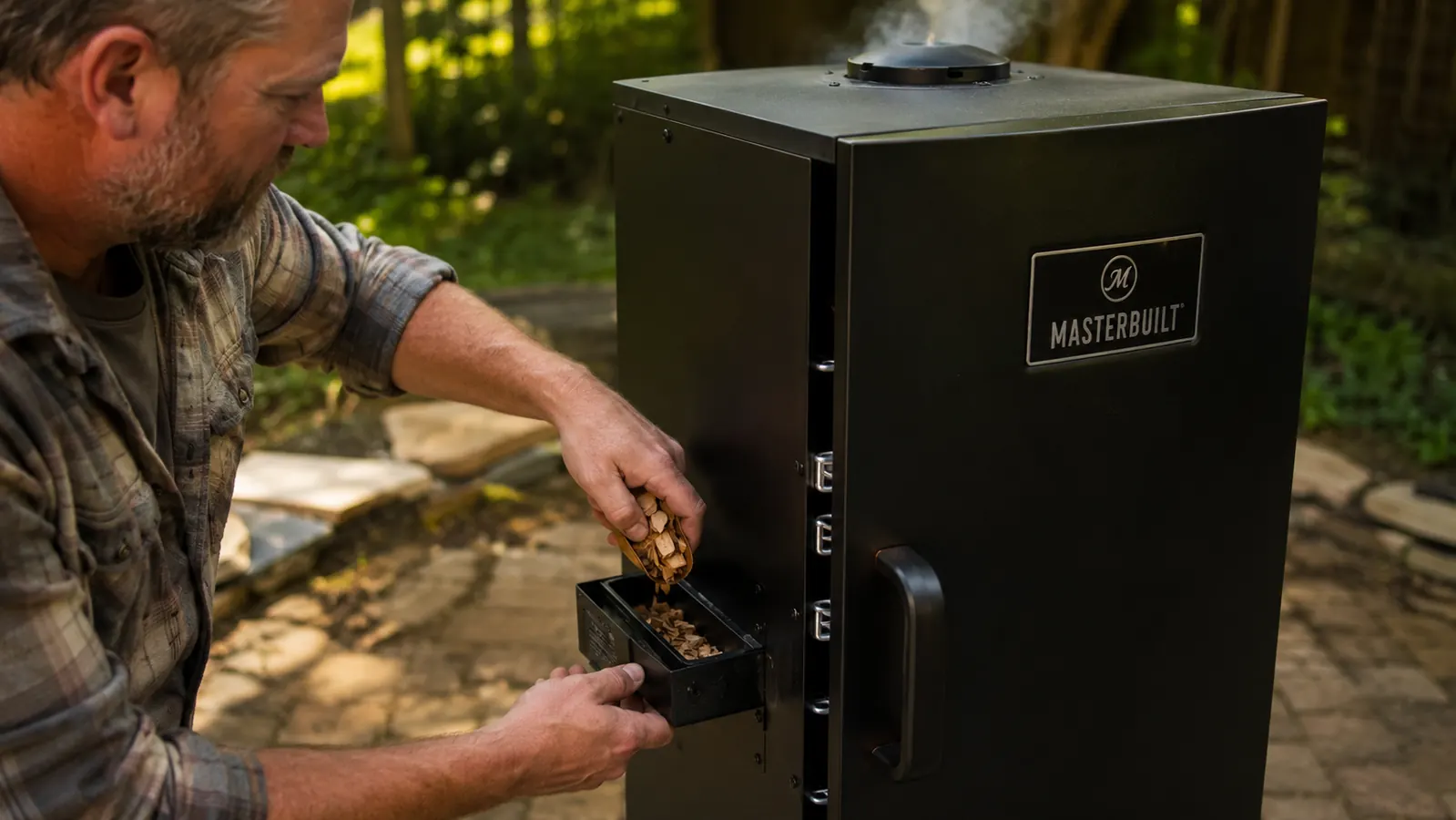
A side-loading wood chip tray means I can add chips without opening the main door and losing heat, and I'm not constantly nudging top and bottom vents to control airflow. For someone still learning how smoke behaves, that's one less variable to manage on every cook. It's a small thing, but it removes one more decision from a process that already has plenty of them for a beginner.
What I'd Skip
I'd skip the electric smoker if what you actually want is the ritual, the fire tending, and the deeper bark a live fire builds over hours. My offset still produces a crust and a smoke ring the Masterbuilt doesn't fully match, and if that intensity is the whole point for you, charcoal and wood still win that argument. If you already know how to read a fire and enjoy the process as much as the result, none of these ten reasons will feel like much of an argument at all. I'd also skip it if you need something you can strap in a truck bed for a tailgate, since this one wants a real outlet, not a cooler and a bag of briquettes. It's a beginner's tool for consistency, not a replacement for a serious offset rig.
It took me a full season of live-fire mistakes to trust a kettle. It took one plugged-in evening to trust a dial.
Ten seasons of fire-tending taught me some nights just need a dial.
If you're picking your first smoker and don't want your learning curve to include ruined dinners, the Masterbuilt 30-inch Electric Smoker is the forgiving place to start. Current price on Amazon, worth checking availability before it changes.
Amazon Check Today's Price on Amazon →