
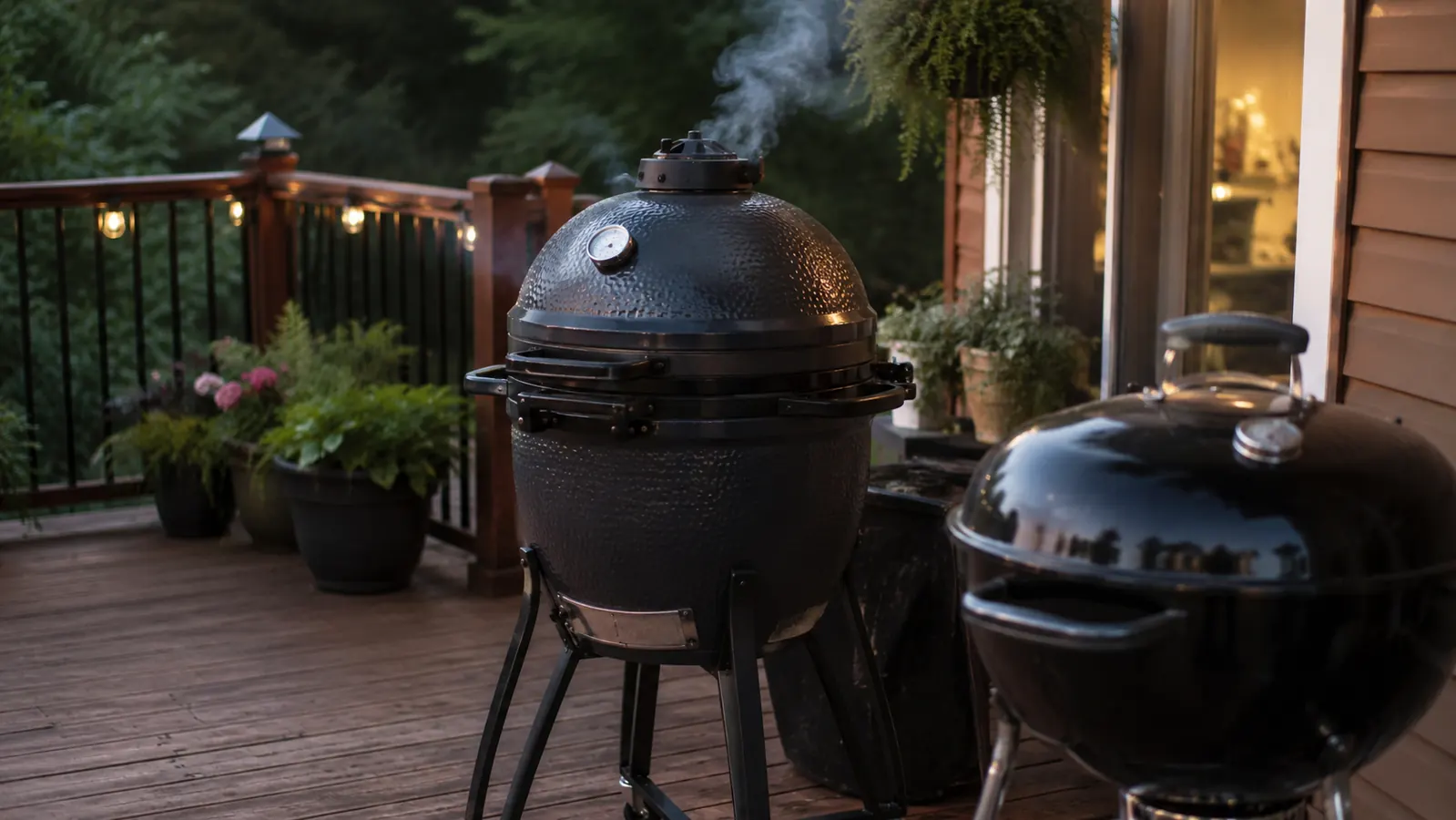
I bought a Char-Griller AKORN for my own deck two winters ago after a decade of listening to Kamado Joe owners talk about their ceramic grills like a member of the family. I wanted the kamado experience, the tight heat control, the real smoke ring, the ability to hold 225 degrees for hours without fussing with the vents every twenty minutes, but I did not want to spend what a used car down payment costs on a grill I would only fire up on weekends. Eleven seasons of backyard cooking on this deck taught me that heavy, expensive gear does not automatically mean better gear, so I set out to find how close the AKORN actually gets to a Kamado Joe Classic, and exactly where it falls short.
The short answer, after cooking on both over the better part of a year, mine plus a friend's Kamado Joe Classic II he keeps two towns over, is that the Char-Griller AKORN delivers somewhere around ninety percent of the ceramic kamado experience at roughly a third of the weight and well under half the cost. It is not identical. The Kamado Joe holds heat a little longer and a little steadier because of its thicker ceramic walls, and the fit and finish on the hinge and felt gasket is genuinely nicer. But for anyone cooking for six to eight people on a normal weekend, not running a competition rig, the AKORN closes that gap further than I expected it to.
| Char-Griller AKORN | Kamado Joe Classic | |
|---|---|---|
| Shell material | Double-walled 22-gauge steel with powder-coat finish | Thick-wall ceramic kamado body |
| Weight | 88 lbs, one person can move it on caster wheels | 216 lbs, needs a hand truck or two people |
| Main cooking surface | 445 sq in on cast iron grates | 254 sq in on an 18-inch ceramic grate |
| Temperature range | 225F to 700F, chases vents in deep cold | 225F to 750F, steadier in cold weather |
| Fuel efficiency | 8 to 10 hours on one load of lump charcoal | 12 to 18 hours on one load of lump charcoal |
| Portability | Locking caster wheels built in, moves in seconds | No wheels standard, effectively stationary once placed |
| Warranty | 5-year limited warranty on the steel body | Lifetime warranty on the ceramic shell |
| Price band | Well under half the cost of a comparable ceramic kamado | Typically seven hundred dollars and up before accessories |
How I Actually Compared Them
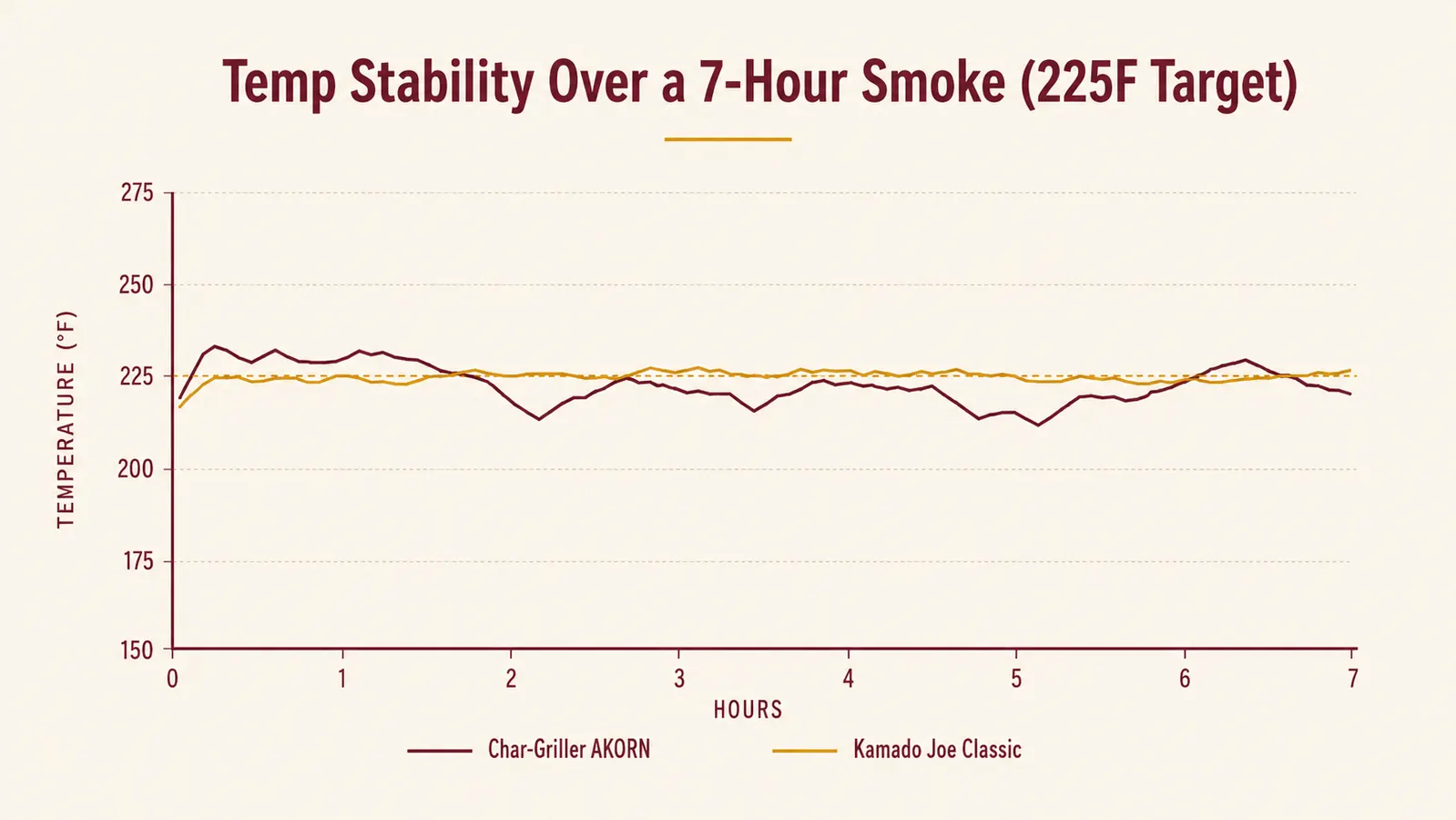
I did not just read spec sheets for this one. My friend's Kamado Joe Classic II sits on his patio about fifteen minutes from my 12 by 14 deck, and over four months we ran the same three tests on both grills back to back: the same brand of lump charcoal, the same cuts of meat, the same weekend. A low and slow pork shoulder held at 225 degrees for seven hours straight, a hot sear test with both grills wide open, and a cold-morning start test in January when the deck thermometer read into the teens, the kind of morning that separates a grill genuinely built for winter cooking from one that just claims to be.
The Char-Griller AKORN held its own in every test except the cold start, where the steel body loses heat to the outside air noticeably faster than thick ceramic does. On a 20 degree morning, the AKORN took close to forty minutes to stabilize at 225 degrees, chasing the vents the whole time, while the Kamado Joe settled in around twenty five minutes and barely needed adjustment after that. That single test is the clearest real difference in daily use between double-walled steel and thick-wall ceramic, and it is worth knowing before you buy either one.
Assembly was the other place the two grills showed their real character. The AKORN arrived in one crate and took me about ninety minutes with a socket wrench and a second set of hands to hold the dome steady while I set the hinge bolts. My friend's Kamado Joe Classic II came mostly pre-assembled on its cart, which cost less time but also cost more up front, since that cart and the nest of accessories that ship with it are baked into the sticker price. Neither one is a difficult build. The AKORN just asks a little more patience for a little less money out the door.
Where the Char-Griller AKORN Wins
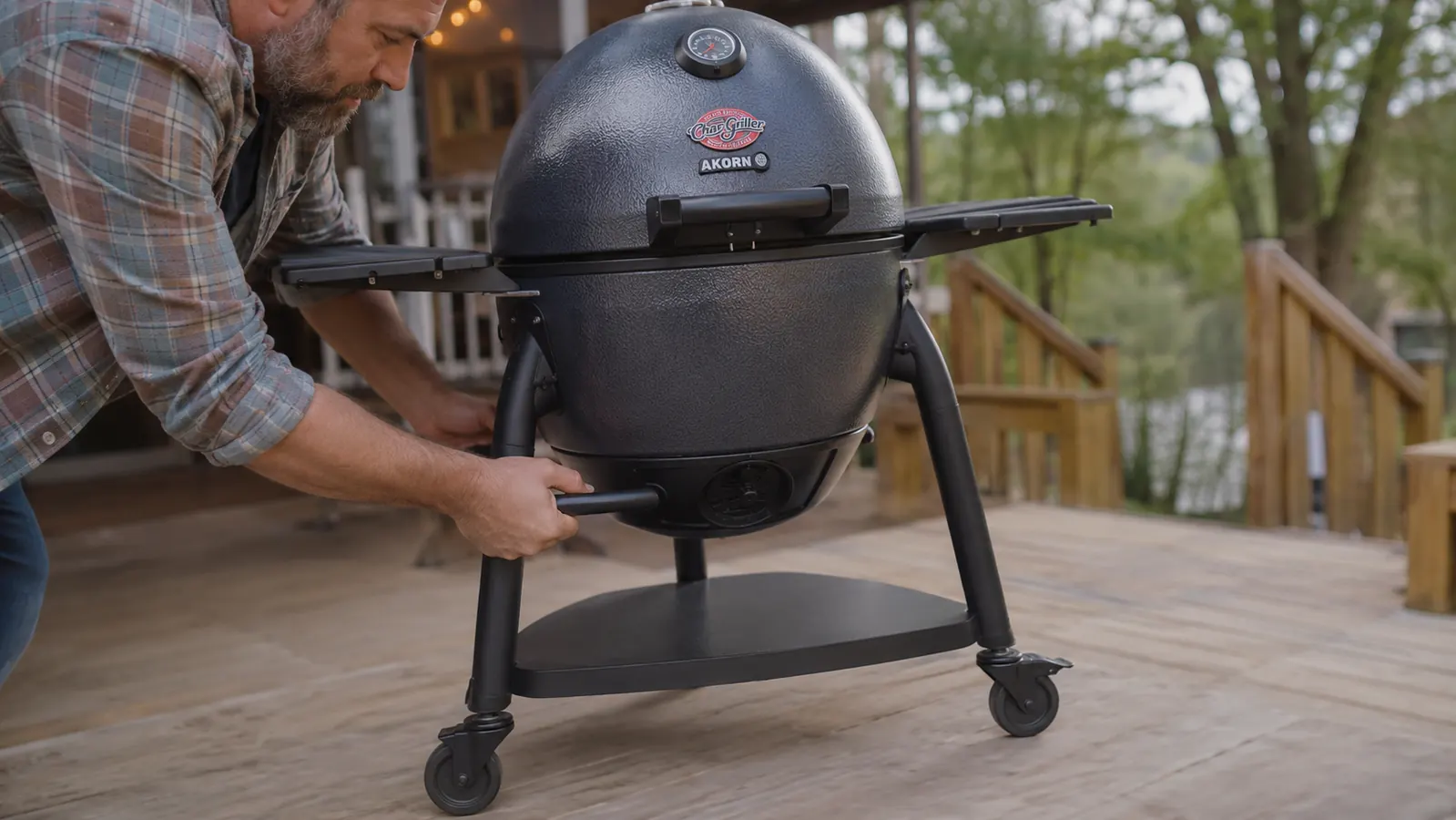
Weight and portability are not a small thing on a 12 by 14 deck that already holds my 22-inch kettle and a small offset smoker. The AKORN's 88 pounds and locking caster wheels mean I can roll it out of the rain by myself in about ten seconds. My friend's Kamado Joe, at over 200 pounds, has moved exactly twice since he bought it, both times with a hand truck and a second set of arms. If you want a kamado grill that can actually change position on your deck through a season, or fit in a truck bed for a tailgate, the AKORN wins that argument outright.
Cost is the other obvious one. The Char-Griller AKORN sits at well under half of what a comparable ceramic kamado costs new, and that gap buys a lot of lump charcoal, a rib rack, and a decent set of grilling gloves for a season or two. For a first kamado, or a second grill that lives alongside a primary smoker the way mine does, that price gap matters more than most reviews give it credit for. I laid out this exact math in more detail in my long-term AKORN review, and after a full year of use it still holds up.
The cast iron cooking grates on the AKORN also deserve a mention. They hold a sear better than I expected from a grill in this price range, and combined with the 445 square inches of main cooking surface, I can run a full rack of ribs plus a pan of beans without crowding anything. That is a genuinely large cooking area for a grill this light, and it is the kind of detail that only shows up once you have actually cooked a full spread on it.
Rust resistance surprised me too. The double-walled 22-gauge steel and powder-coat finish on the AKORN has held up through a full Pennsylvania spring, summer, and one nasty ice storm without a spot of rust showing on the body, as long as I keep the felt gasket dry and cover it between cooks. Ceramic does not rust at all, obviously, but it can crack if it takes a hard knock while you are moving it, which is one more reason I am comfortable rolling the AKORN around and would think twice before doing the same to a ceramic shell.
Where the Kamado Joe Classic Wins
Ceramic wins on raw heat retention, full stop. The Kamado Joe Classic's thick-wall construction holds a set temperature within a tighter band and for longer stretches on one load of charcoal, which matters if you are running overnight cooks or you tend to forget about the vents once dinner is going. It is also a quieter grill to manage in cold weather, since it does not lose heat to the shell the way steel does, which showed up clearly in our cold-morning test.
Build details are the other place the Kamado Joe pulls ahead. The felt gasket seals tighter around the lid, the hinge assembly feels more refined under load, and the overall fit and finish reads as a grill built to be handed down rather than replaced in a decade. None of that changes how the food actually tastes off either grill, but if that kind of long-term heirloom feel matters to you more than price or weight, it is a real and honest advantage for the Kamado Joe.
The accessory ecosystem is worth a mention as well. Because Kamado Joe has been at this longer and sells at a higher price point, there is a deeper bench of official add-ons, expansion racks, pizza stones, half-moon grates that snap into the cart without adapters. The AKORN accepts plenty of third-party kamado accessories, and I have never felt truly limited, but if you want everything to come from one brand with a matching finish, the Kamado Joe lineup gives you that in a way the AKORN does not try to.
Get most of what a full-size ceramic kamado does, minus the weight and minus the sticker shock.
The Char-Griller AKORN held 225 degrees for seven hours in my own backyard tests and rolled out of the rain on caster wheels in about ten seconds. Current price on Amazon, well under half of a comparable ceramic kamado.
Amazon Check Today's Price on Amazon →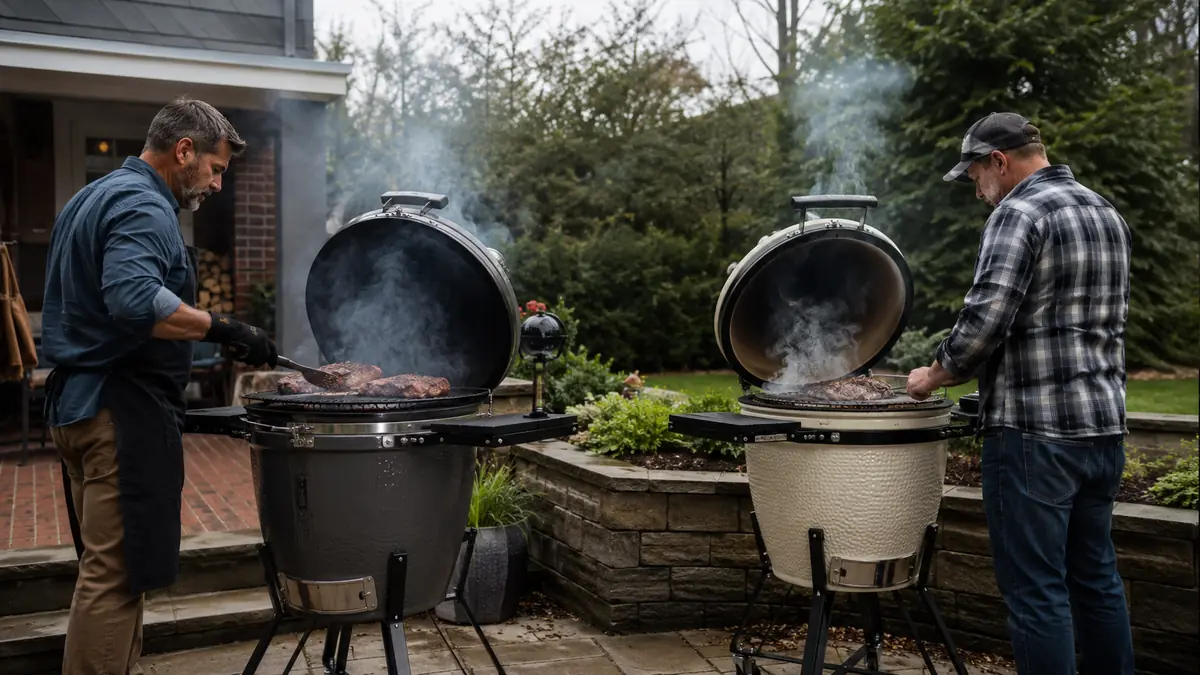
What Surprised Me About Both
I went into this comparison expecting the Kamado Joe to simply outclass the AKORN across the board, the way a heavier price tag usually implies. That is not what happened. Blind to the brand, most of the food off either grill was hard to tell apart on flavor, and my houseguests could not consistently pick which pork shoulder came from the ceramic grill and which came from the steel one. The differences that showed up were about handling and convenience, not about what ended up on the plate.
The other surprise was how little I missed the extra heat retention in normal use. Seven hours is a long cook, and the AKORN handled it without drama on anything short of a genuinely cold morning. Unless you are routinely running twelve-hour briskets through a Pennsylvania winter, the gap in fuel efficiency between the two grills is more theoretical than something you will feel most weekends.
Who Should Buy Which
If you cook for a group in the six to eight person range most weekends, want low and slow results without babysitting vents every twenty minutes, and do not want to dedicate a permanent, immovable corner of the patio to a grill that weighs more than 200 pounds, the Char-Griller AKORN is the more sensible buy for almost everyone reading this. It gets close enough to the ceramic kamado experience that the difference mostly shows up in edge cases, deep cold mornings and multi-day cooks, not on a normal Sunday feeding six to eight people.
The Kamado Joe Classic makes more sense if you cook in genuinely cold climates on a regular basis, run overnight cooks often enough that the extra heat retention pays for itself, or simply want the nicer build quality and do not mind paying for it. I go deeper into where the AKORN specifically shines and where it does not in my honest review of the AKORN on its own, including the parts of it I would change if I could.
Eleven seasons of backyard cooking, and this is the kamado grill that earned a permanent spot on my deck.
If you have been eyeing a ceramic kamado but the weight and the price keep talking you out of it, the Char-Griller AKORN is worth a real look. Check current availability and price on Amazon before deciding.
Amazon See the Char-Griller AKORN on Amazon →