
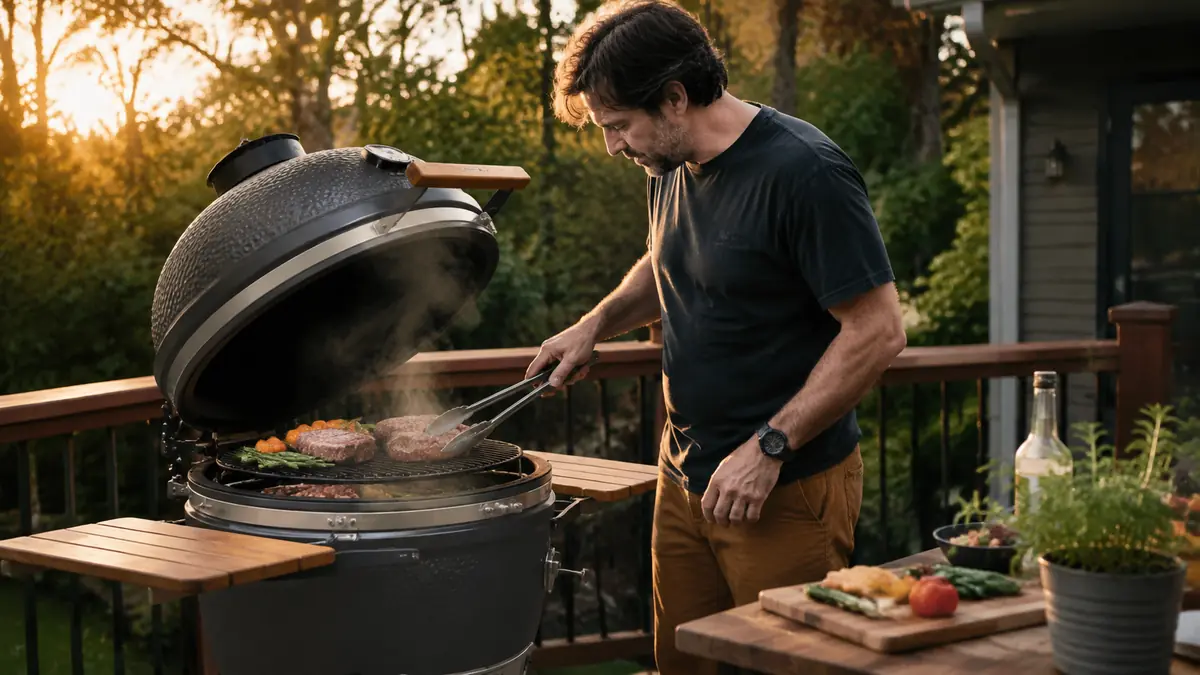
Eleven seasons of backyard cooking on a 22-inch charcoal kettle taught me plenty about heat, but it also showed me exactly where a plain kettle runs out of road. The kettle sears fine and holds a decent low-and-slow fire if I babysit the vents every twenty minutes, but it loses heat fast on a windy Pennsylvania evening and burns through charcoal at a rate that gets expensive by August. Adding a Char-Griller AKORN kamado grill to the deck last year changed the math on both problems, and after a full year running it alongside the kettle and my small offset smoker, I have ten specific, testable reasons a kamado cooks better than a standard charcoal grill for what a backyard cook actually does on a normal Sunday.
This is not an argument against kettles or offsets. I still use both every week. It is a plain accounting of what changes once the cooking chamber is thick, insulated steel instead of thin painted metal, worked out on one grill I have run through a full year of seasons, the Char-Griller AKORN. Here is what a kamado does differently, reason by reason.
Before the ten reasons, here is the grill that backs them up.
Everything below comes from a year running the Char-Griller AKORN on a 12 by 14 back deck through a Pennsylvania winter, spring, and summer. Current price on Amazon, with free shipping for Prime members.
Amazon Check Today's Price on Amazon →It Holds a Temperature Instead of Chasing One
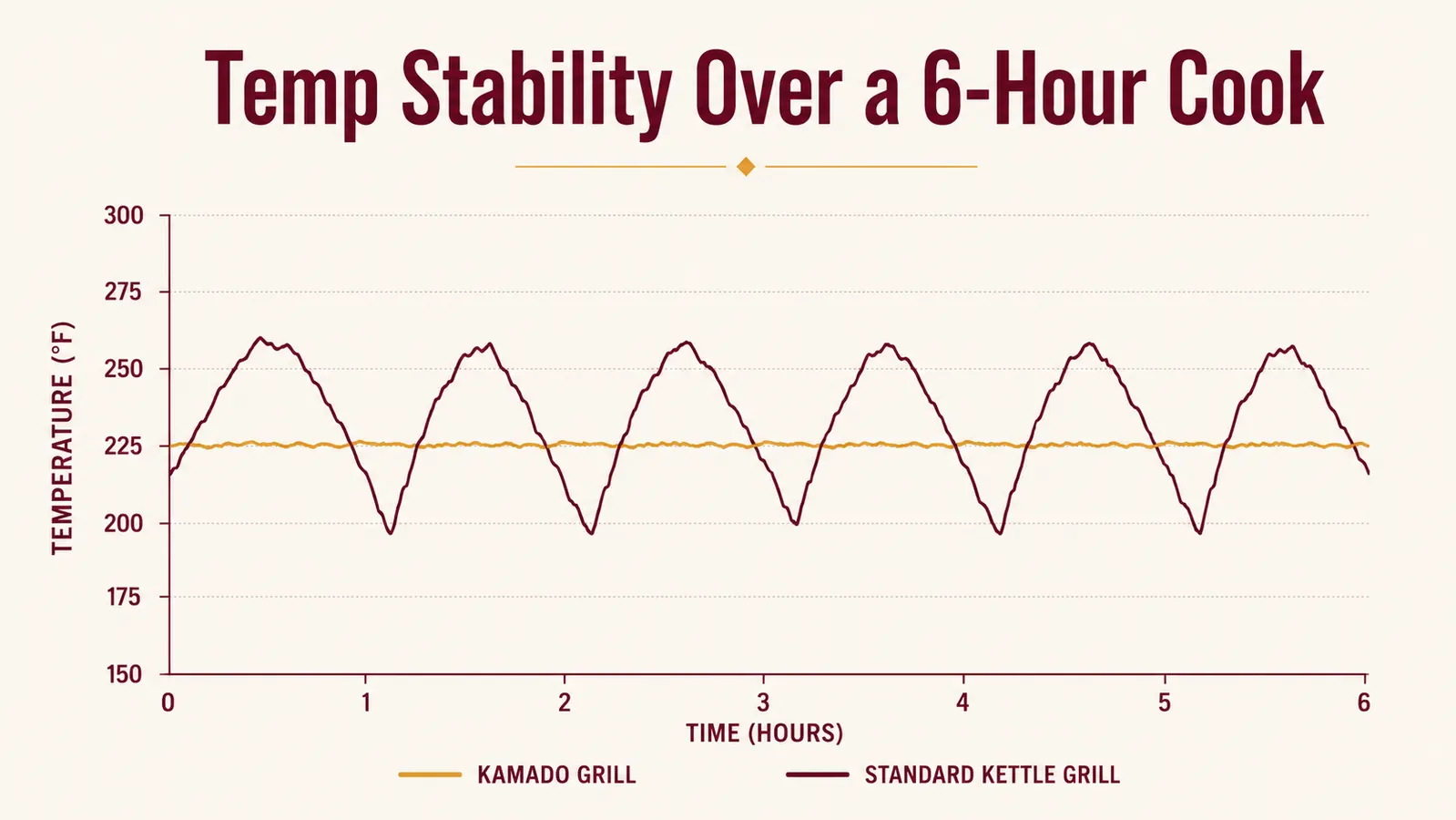
A standard kettle asks you to babysit the vents constantly, a gust of wind or a lid left open ten seconds too long and the whole cook drifts. The double-walled steel body on the Char-Griller AKORN traps heat the way a heavier-walled kamado does, so once I dial in 225 degrees and set both dampers, it holds within ten to fifteen degrees for hours without me touching a thing.
One Grill Replaces Three Separate Setups
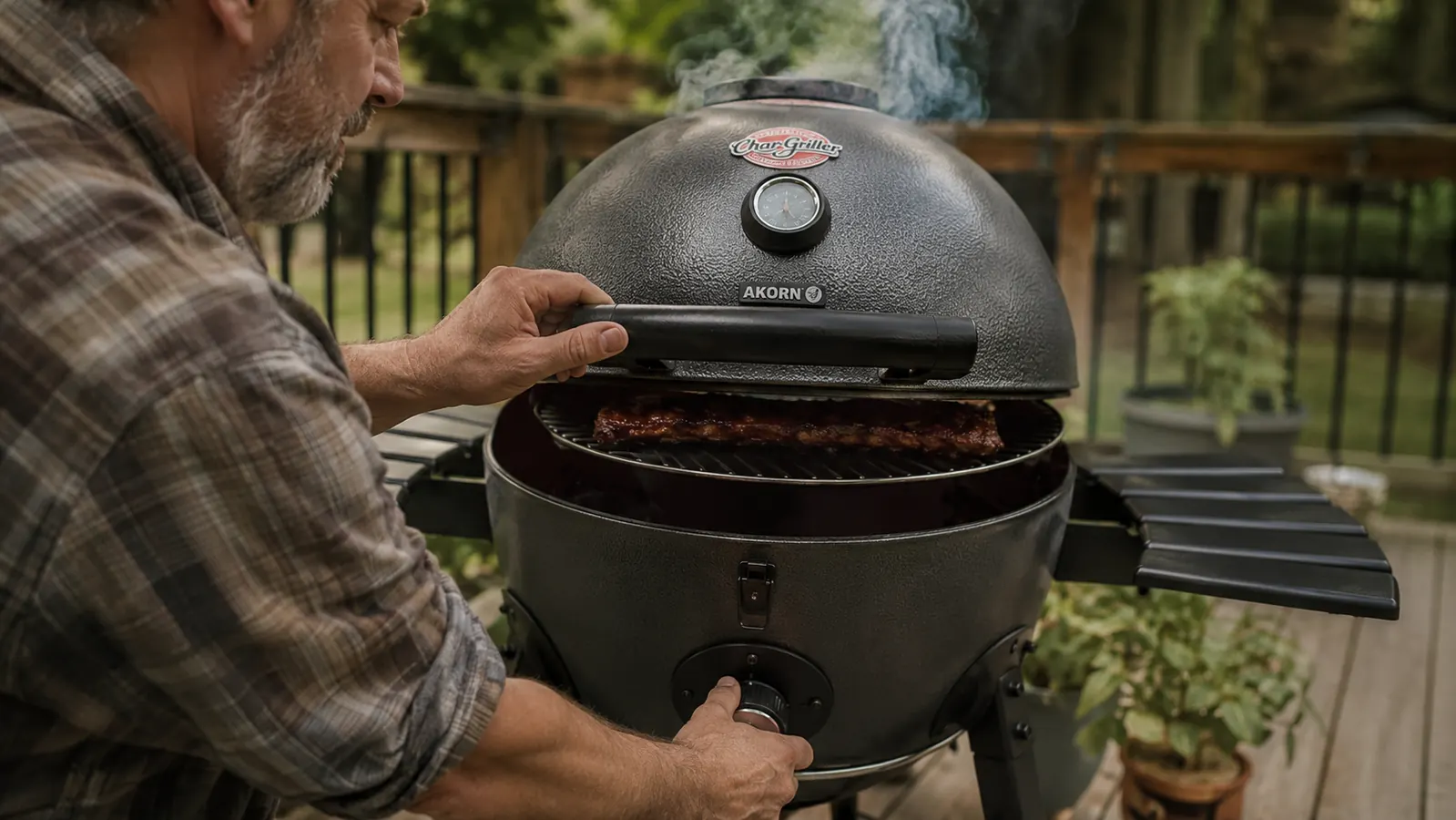
Between the kettle for searing, the offset for smoke, and a pizza stone rig I keep in the garage, I used to swap gear depending on what was for dinner. The AKORN handles all three jobs in one body. I have smoked a full rack of ribs low and slow, then closed the vents and used the residual heat to sear vegetables for the next night. There is a full walkthrough of the ribs cook in this piece if you want the exact vent settings I used.
It Burns Noticeably Less Charcoal Per Cook
Closing a kamado's dampers down starves the fire of oxygen instead of letting it roar, which is why a single full load of charcoal in the AKORN has carried me through a twelve to fourteen hour low-and-slow cook, something my kettle has never come close to on one load. Less charcoal per pound of meat cooked adds up fast if you cook every week the way I do.
Thick Walls Keep Meat From Drying Out
A thin kettle lid lets moisture escape fast, part of why long cooks on a plain kettle can come out drier than you'd like. The AKORN's insulated shell holds humidity inside the cooking chamber better than anything I have run on this deck, and it shows in the bark on ribs and the pull on a pork shoulder, both come out with more moisture at the end of a long cook than the same cut on my kettle.
It Swings From Low and Slow to Screaming Hot
I have run the AKORN as low as 225 degrees for an overnight pork shoulder and as high as 650 to 700 degrees with the vents wide open for a cast iron steak sear, on the same grill, same afternoon, about forty minutes apart. A standard kettle can technically do both too, but a true screaming sear takes far more charcoal and fanning than opening a kamado's dampers and waiting ten minutes.
Two Vents Give You Real Control, Not Guesswork
The top and bottom dampers on the AKORN work together like a throttle, open both and the fire climbs fast, close the bottom most of the way and crack the top and it settles into a slow simmer that barely moves. On a plain kettle I am adjusting a single vent and shifting coals with tongs to get anywhere near that precision. Once you learn the AKORN's dial positions, dialing in a target temperature takes under two minutes.
Cast Iron Grates Actually Hold a Sear
The AKORN ships with cast iron cooking grates instead of the thin chrome-plated wire most kettles use, and the difference shows up the second a steak hits the surface. Cast iron holds its stored heat through the drop in temperature that happens when cold meat touches metal, so you get real crosshatch sear marks instead of the pale, steamed look a thin grate leaves behind.
Cold Weather Doesn't Beat It the Way It Beats a Kettle
I have fired the AKORN on nights the deck thermometer dropped into the teens, and the insulated body holds heat in a way my thin-walled kettle simply cannot in that kind of cold. On a kettle, a freezing night means burning extra charcoal just to fight the heat loss through the metal. The AKORN barely notices, the same load that runs a summer cook runs a winter one with only a small bump in burn rate.
The Build Quality Isn't Just a Marketing Line
The AKORN's locking lid latch keeps heat sealed in even in wind that would blow a lighter kettle lid loose, and the felt gasket around the rim keeps smoke from leaking out the sides the way a warped kettle lid tends to after a couple seasons. The graphite finish on mine has held up through a full year outdoors under a cover, with no rust starting anywhere on the body.
It Feeds a Full Table Without Running a Second Shift
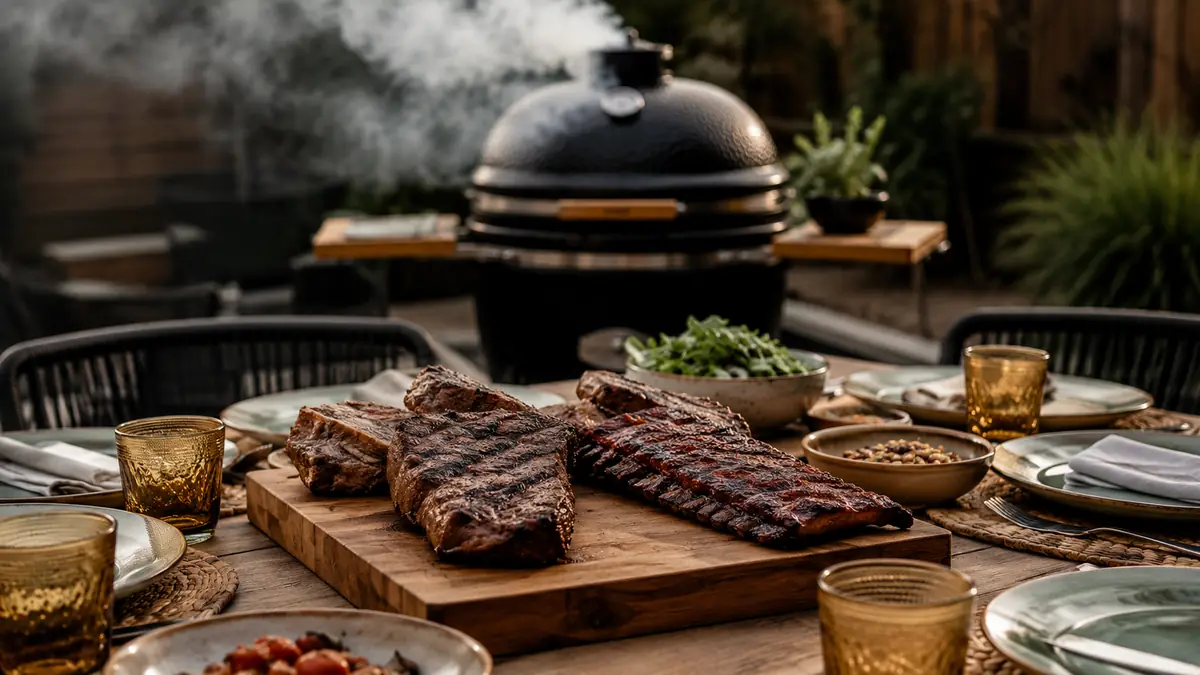
At 445 square inches of cooking area, the AKORN's main and warming grates together fit a full spread for the six to eight people I typically cook for on a Sunday, ribs on the bottom grate, corn and vegetables warming on the upper rack, all in one load without a second batch. That single-load capacity is a real reason it cooks better for a normal-sized cookout, not just a spec on a box.
What I'd Skip
None of this means the Char-Griller AKORN is flawless. It is heavier than a kettle, close to sixty pounds assembled, and moving it across the deck is a two-hand job, not something you casually slide with one foot. The first few cooks also come with a real learning curve, I overshot 225 degrees by nearly a hundred on my very first low and slow attempt because I opened the bottom vent too far and walked away. And the felt gasket, while it seals well now, is a wear item you will eventually replace.
If you cook two or three times a summer and mostly want a quick weeknight sear, the Char-Griller AKORN is more grill than you need and the learning curve will feel like a chore rather than a payoff. The Char-Griller AKORN earns its keep for cooks like mine, weekly, year round, feeding six to eight people, where the fuel savings and the temperature control add up fast.
The first time I closed both vents down and the fire held steady at 225 degrees for six hours without me touching a thing, I understood why kamado owners get evangelical about a design that has been around for centuries.
Ten reasons, one grill that's held up on this deck for a full year.
If any of these ten reasons matched a frustration you have had with a standard charcoal grill, the Char-Griller AKORN is worth a look at its current price on Amazon before it moves.
Amazon See the Char-Griller AKORN on Amazon →