
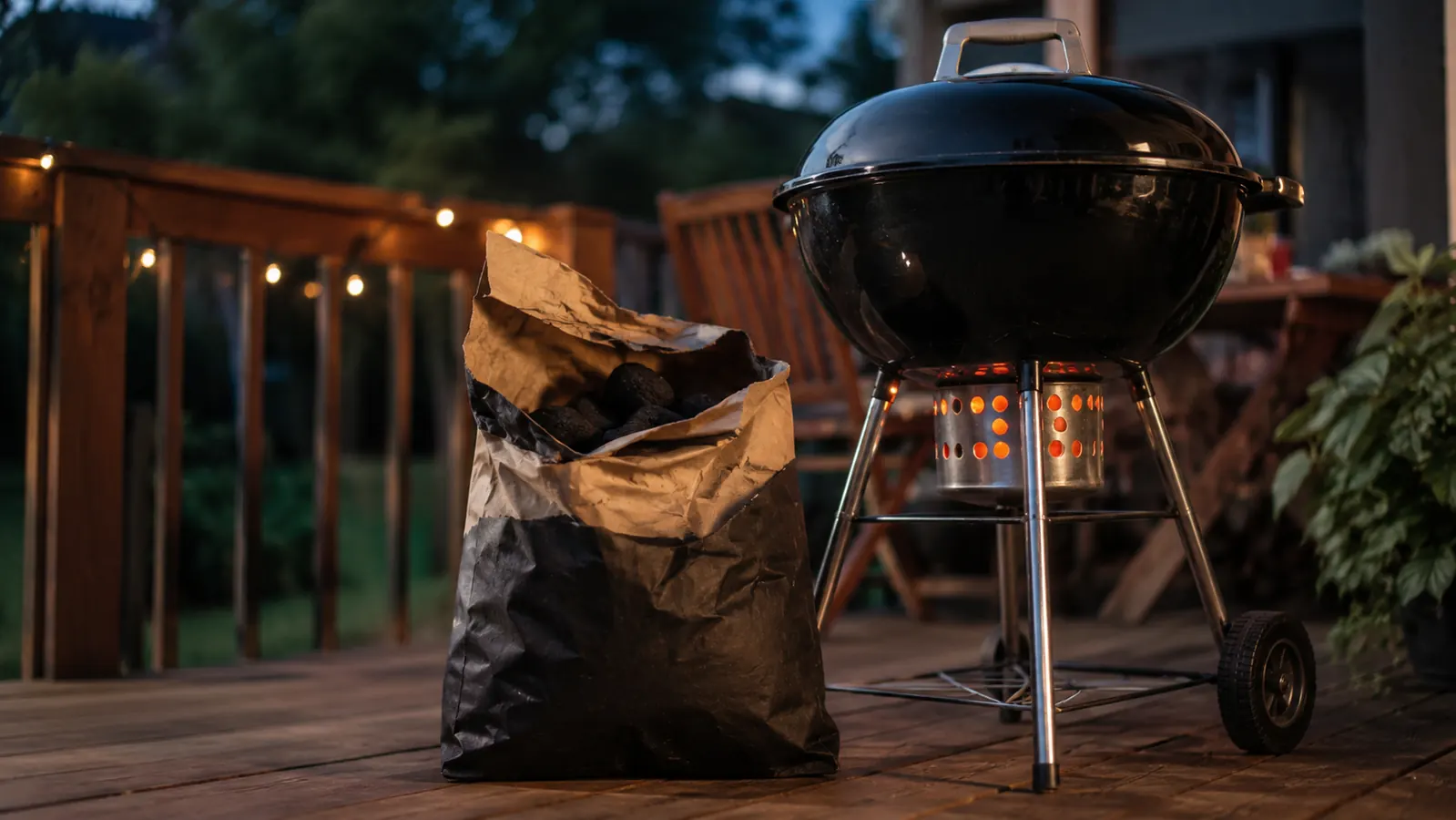
I have burned through more bags of charcoal over eleven seasons than I could ever count, and for most of that time I did not think much about which bag I grabbed off the shelf. Charcoal was charcoal. I had a 22-inch charcoal kettle on my 12 by 14 back deck, a rotation of Sunday cookouts for six to eight people, and I figured any briquette that lit and got hot was doing its job. That changed on a Sunday in late June, two summers ago, over a batch of chicken thighs that should have been the easiest cook of the year. I have gone back to Kingsford Original every cookout since, and this is the batch of chicken that taught me why.
I had grabbed a store-brand bag that week because it was two dollars cheaper, and I did not think twice about it. I built my usual two-zone fire, waited for the coals to gray over, and set eight thighs down skin-side to the heat. Ten minutes in, half the grill was running hot enough to scorch and the other half had gone nearly cold. I moved pieces around, chased the heat with tongs, and still pulled four thighs that were blackened on the edges and three that were pale and underdone in the middle. My brother-in-law was standing right there with a beer in his hand watching me shuffle chicken like a shell game. Nobody said anything, but I knew.
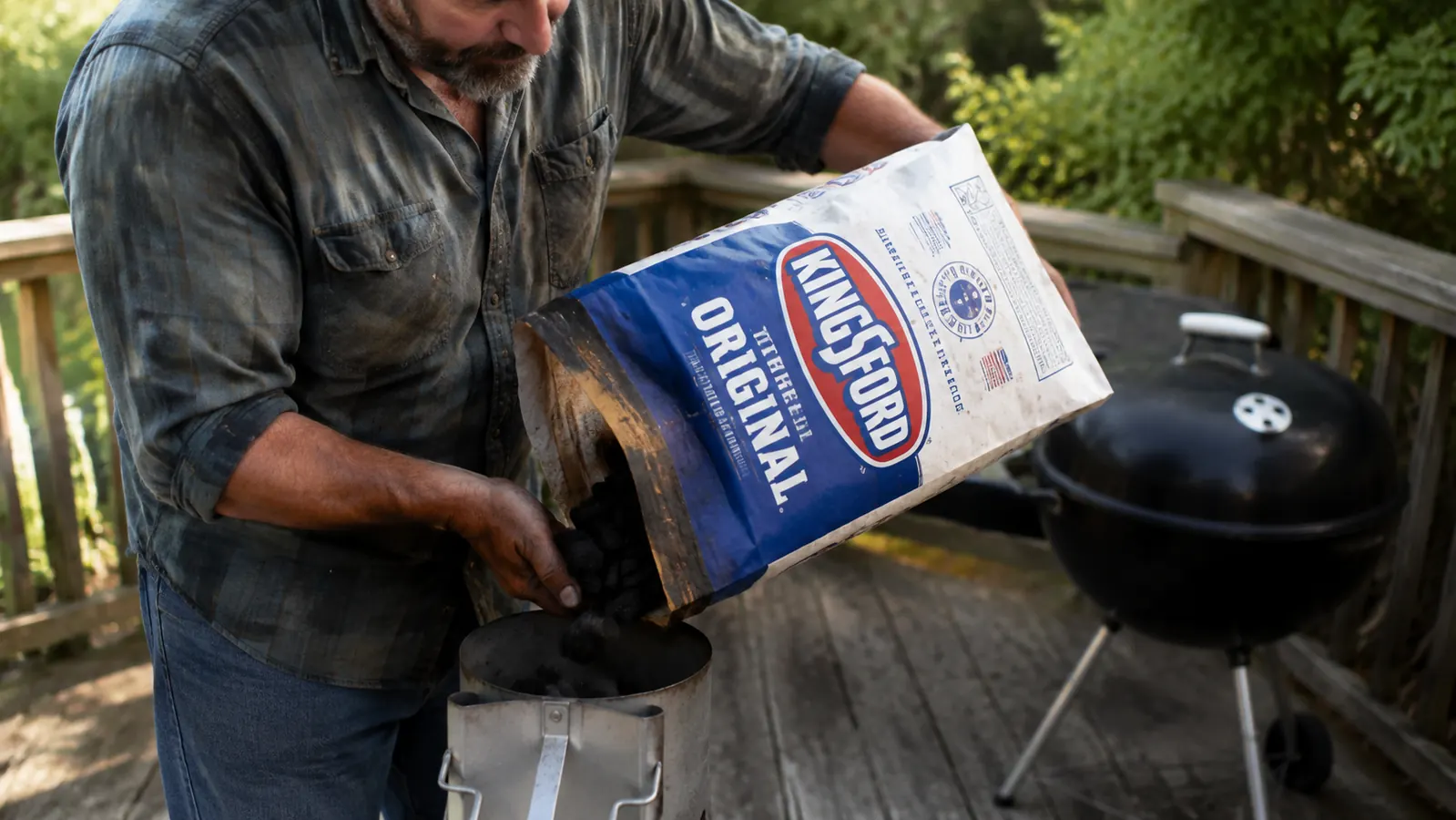
That was the last time I bought whatever was cheapest on the shelf. The next week I picked up a bag of Kingsford Original briquettes, mostly because it was the name I remembered my dad using on his grill when I was a kid, and I wanted something I could trust not to embarrass me in front of family again.
The difference showed up before the food even hit the grate. I filled my chimney starter with Kingsford, lit it under the kettle, and watched the coals catch even and gray across the whole load in about fifteen minutes, no patchy spots, no half of the pile lagging behind. When I dumped them into the kettle and spread them out, the heat held steady across the grate in a way that store-brand charcoal never had for me. I ran the same two-zone setup I always use, and this time the hot side stayed hot and the cool side stayed cool, exactly where I put them.

I will admit I went into that cook a little defensive, half expecting the same letdown. It did not happen. The chicken came off even, skin crisped on all eight pieces, nothing scorched, nothing pale in the middle. My brother-in-law asked what I changed. I just held up the empty Kingsford bag.
It was not a dramatic transformation, just a fire that behaved the same way every single time I lit it, which after eleven seasons of guessing is worth more than almost anything else I own on that deck.
Stop chasing hot spots around your own grill.
If you have ever stood over a kettle moving food around because the fire will not cooperate, a steadier charcoal fixes more of that than any new grill accessory will. Current price on Amazon, with free shipping for Prime members.
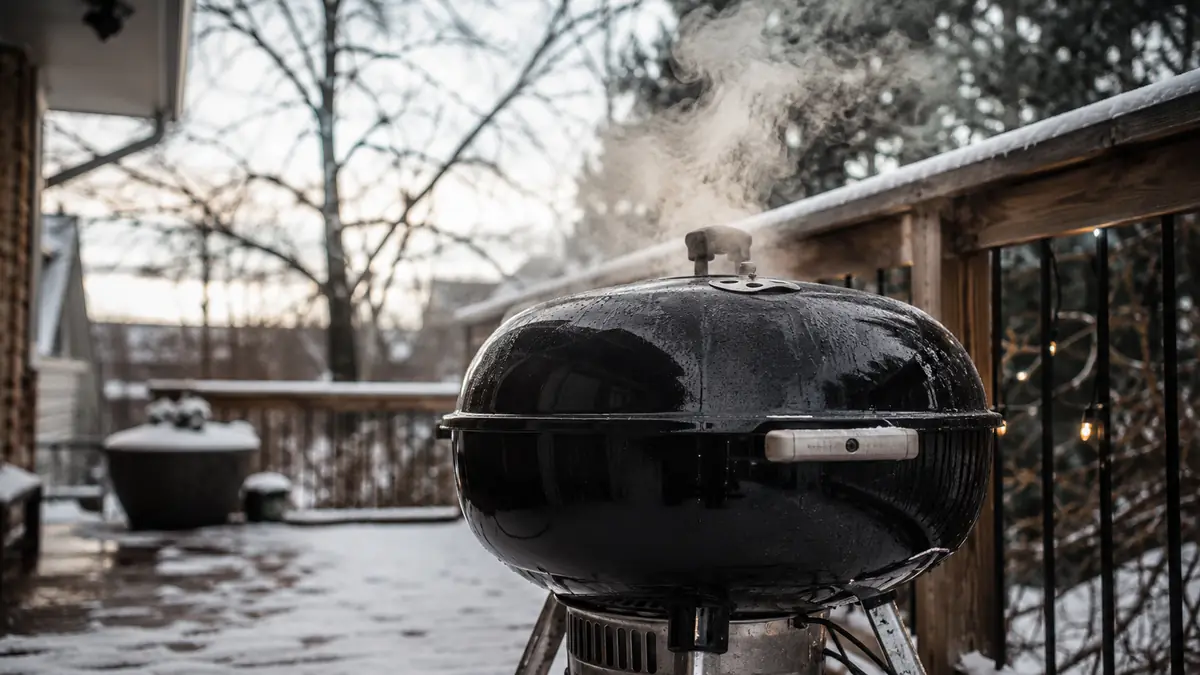
Amazon Check Today's Price on Amazon →Since that Sunday I have not bought another brand. I keep a couple of bags of Kingsford in the garage year round now, and I have used it through a full Pennsylvania spring, a summer of near-weekly cookouts, and a winter where the deck thermometer dropped into the teens more than once. Cold weather is usually where cheap charcoal shows its worst side, slow to catch, weak once it does, needing constant babysitting to hold temperature. Kingsford still lit within a normal window even on those cold nights, and once it caught, it held heat close to what I get in July.
I have also started reaching for it in my small offset smoker, not just the kettle, mixed with a few chunks of hardwood for low-and-slow cooks. It burns cleaner than I expected for a briquette, no chemical smell off the bag, and the ash left behind is fine and manageable rather than the chunky, uneven ash some other brands leave in the bottom of the firebox. I wrote up the specifics on burn time and ash output separately if you want the numbers rather than the story, in my honest review of the Kingsford briquettes.
What sticks with me most is not any single cook, it is that I stopped thinking about the charcoal at all. For eleven seasons I treated the fuel as an afterthought and the fire as something I had to fight. Now I light a chimney of Kingsford, wait fifteen minutes, and trust it to do what I ask. That trust is worth more on a Sunday with six or eight people standing around your deck than any single feature on a bag ever could be.
I put together a longer list of reasons I have landed on briquettes over lump charcoal for most of my cooks, if you are on the fence about which way to go, over in this piece. But the short version is the one I told my brother-in-law that Sunday. It is not that Kingsford is flashy. It is that it is the same, cook after cook, in June and in January, and after eleven seasons of guessing, that consistency is the whole point.
What I'd Tell You If We Were Sitting at My Kitchen Table
If you asked me straight out whether switching charcoal is worth thinking about, I would tell you the truth, which is that it sounds like a small thing until you are the one standing over a half-cooked dinner with people watching. I am not going to tell you Kingsford will turn you into a different cook overnight, because it will not. What it did for me was take one variable out of the equation, the fire itself, so I could stop guessing and start actually cooking. That is not a dramatic pitch. It is just what happened on my deck, and it is why the bag in my garage has not changed in two years.
A steadier fire starts with the bag you buy.
Two summers of Sunday cookouts later, this is still the charcoal I keep stocked in the garage. Current price on Amazon, worth checking before your next cookout.
Amazon See Kingsford Charcoal Briquettes on Amazon →